
The short version
A clinic that's good at veneers starts the consultation by asking, "What bothers you when you smile?"
They explain tooth by tooth where they'll shape and why, and they decide how many veneers you need based on which teeth show when you smile and the color of the teeth next to them.
At SU Dental Hospital, we use an AI smile simulation and our in-house lab to fine-tune the color and shape several times before bonding.
Hello, I'm Dr. Suwan Kim, head dentist at SU Dental Hospital.
"Every clinic online says they're great. I have no idea where to go."
It's the thing I hear most often at veneer consultations.
I understand why. Every clinic's after photos look good.
When I judge whether a clinic is good at veneers, I look at three things.
Whether the consultation starts with your concerns, whether the dentist explains where they'll shape your teeth and why, and whether they keep the number of veneers to what you actually need.
None of them show up in result photos; you only see them at a consultation.
I teach veneer seminars for other dentists, and even there, the part I spend the most time on is how we get to the result.
So here's that process, in the order it happens in the treatment room.

Lecturing at a veneer seminar for dentists
1. What question should a veneer consultation start with?
Two people can both say "my front teeth bother me" and mean very different things.
For some it's yellowing, for others it's a gap between the front teeth, and for others one tooth just looks smaller than the rest.
So I start consultations by asking, "What bothers you most when you smile?"
If color is your only concern, teeth whitening might come first; for a small gap, composite bonding might.
If an edge is a little long or the tips are slightly uneven, a bit of cosmetic contouring, where we lightly reshape just the surface, is sometimes all it takes.
If the teeth are quite crooked, I'll also show you the option of straightening them with orthodontic treatment first.
Lining the teeth up first means less shaping if you do get veneers later, and some people end up happy with orthodontics alone.
That's why some people come in for a veneer consultation and leave being told, "I don't think you need veneers."
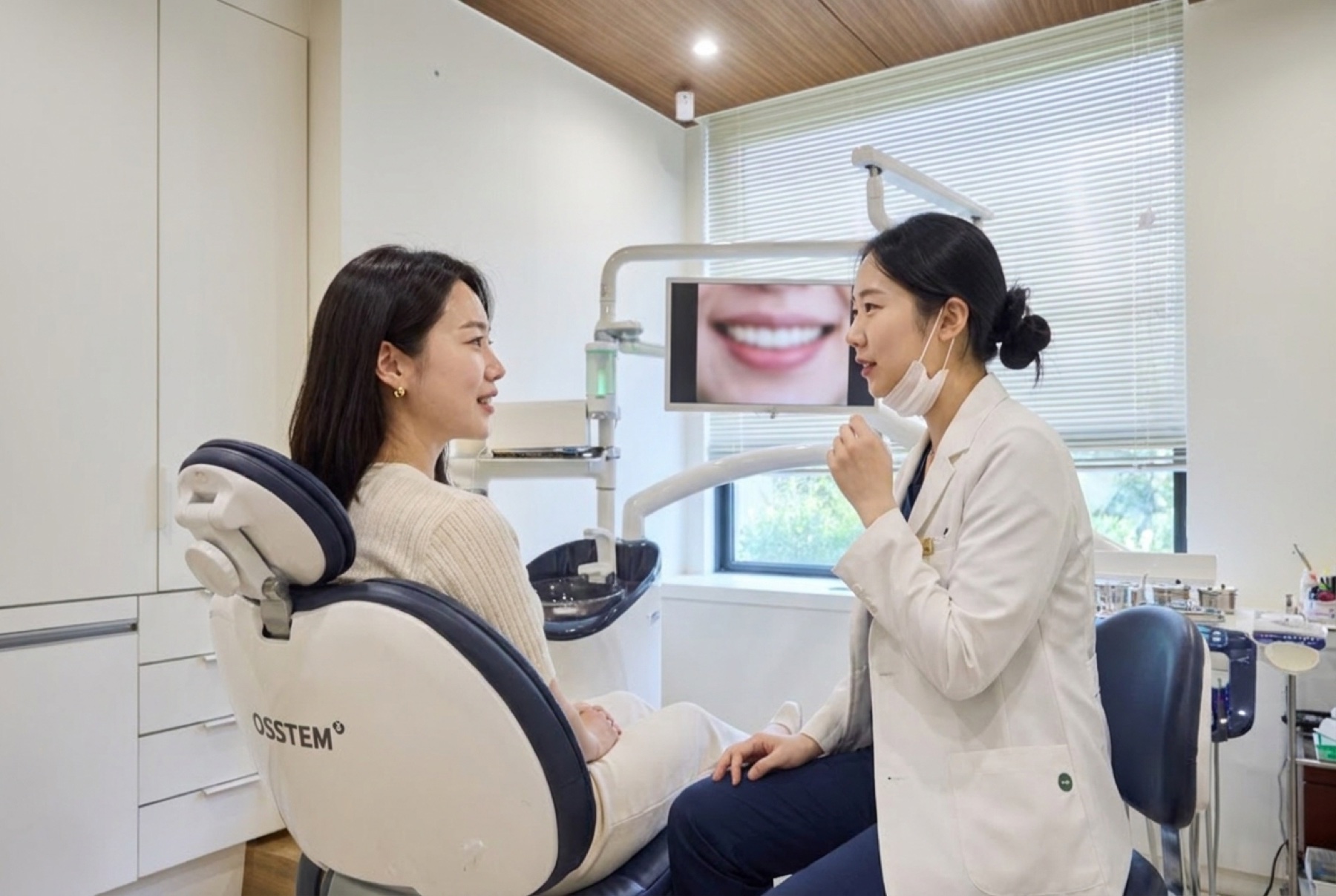
I start by asking what bothers you when you smile (staged photo)
2. How much to shape: the reason comes before the number
"How many millimeters will you take off?" is the question patients ask me most at consultations.
I don't answer it with a single number.
The amount that needs shaping differs from tooth to tooth, and even from one part of the same tooth to another.
Spots that sit further back can be left alone, while spots that stick out need a little trimming to look natural.
If you put ceramic straight over a tooth that already sticks out, it ends up looking even more prominent.

Ceramic veneers thin enough to let light through
Teeth that have darkened after a root canal are a different story.
A thin layer of ceramic lets the dark color underneath show through, so sometimes we need to shape a bit more to make room for enough thickness to hide it.
On the other hand, if the tooth is already light and the main goal is changing the color, we sometimes finish with almost no shaping at all.
Once a tooth has been shaped, it can't go back to the way it was.
So at the consultation I tell you, tooth by tooth, where I'll shape and why, and if I can't explain why tooth structure needs to come off, I don't think it should come off.
3. How do you decide how many veneers?
The number of veneers isn't something to decide up front.
We decide it by looking at which teeth show when you smile, the color of the teeth next to them, and how much change you're hoping for.
For some people one veneer is enough, and for others it takes several to look natural.
The two center front teeth sit right in the middle of your face, so they need to mirror each other to look natural.
If only one is changed, the other can look shorter or smaller, so in that case I show you simulations of one veneer and of two side by side and let you choose.
When I explain this, I often think of a made-to-measure suit.
Just as a suit is cut to fit your body, veneers are planned in number and shape around the teeth you have now.
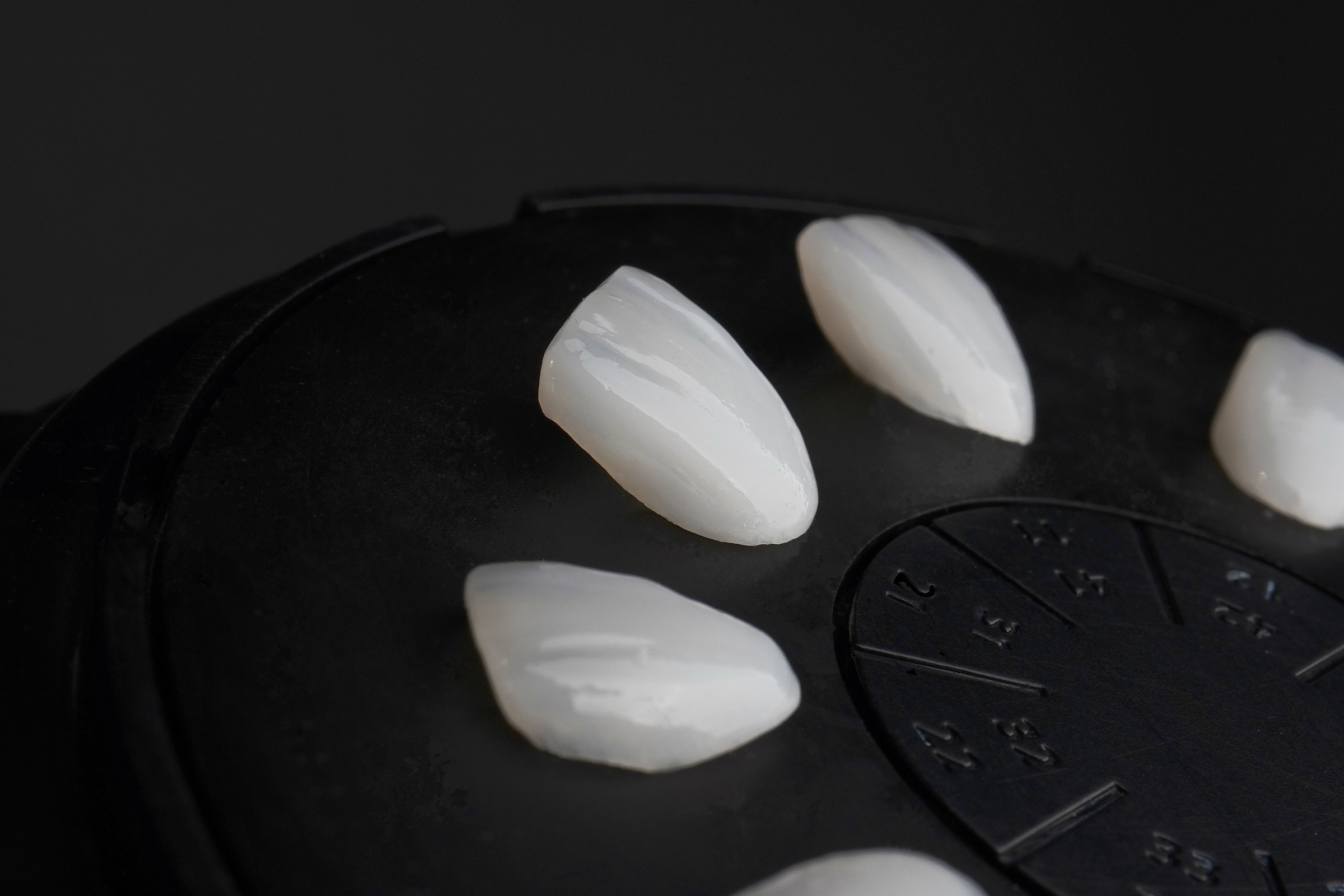
Veneers with the length and shape set tooth by tooth
4. Previewing the result when it helps
Once veneers are bonded, they're hard to undo if you don't like them.
So at the consultation we first look at your future smile together with an AI smile simulation, and when needed, we put a mock-up of the new shape on your teeth to check the length and outline again.
For color, we consider your skin's undertone (what's often called your personal color) and pick a brightness that suits your skin tone and the teeth next to the veneers.
If you're having only a few front teeth done and keeping the rest natural, we sometimes whiten the neighboring teeth to the brightness you want first and then make the veneers to match.
Whitening won't change the color of ceramic once it's bonded, so doing things in this order helps the whole smile match.
What you see on the screen is a guide for the overall direction, and in the chair we fine-tune the color, thickness, and bite again.
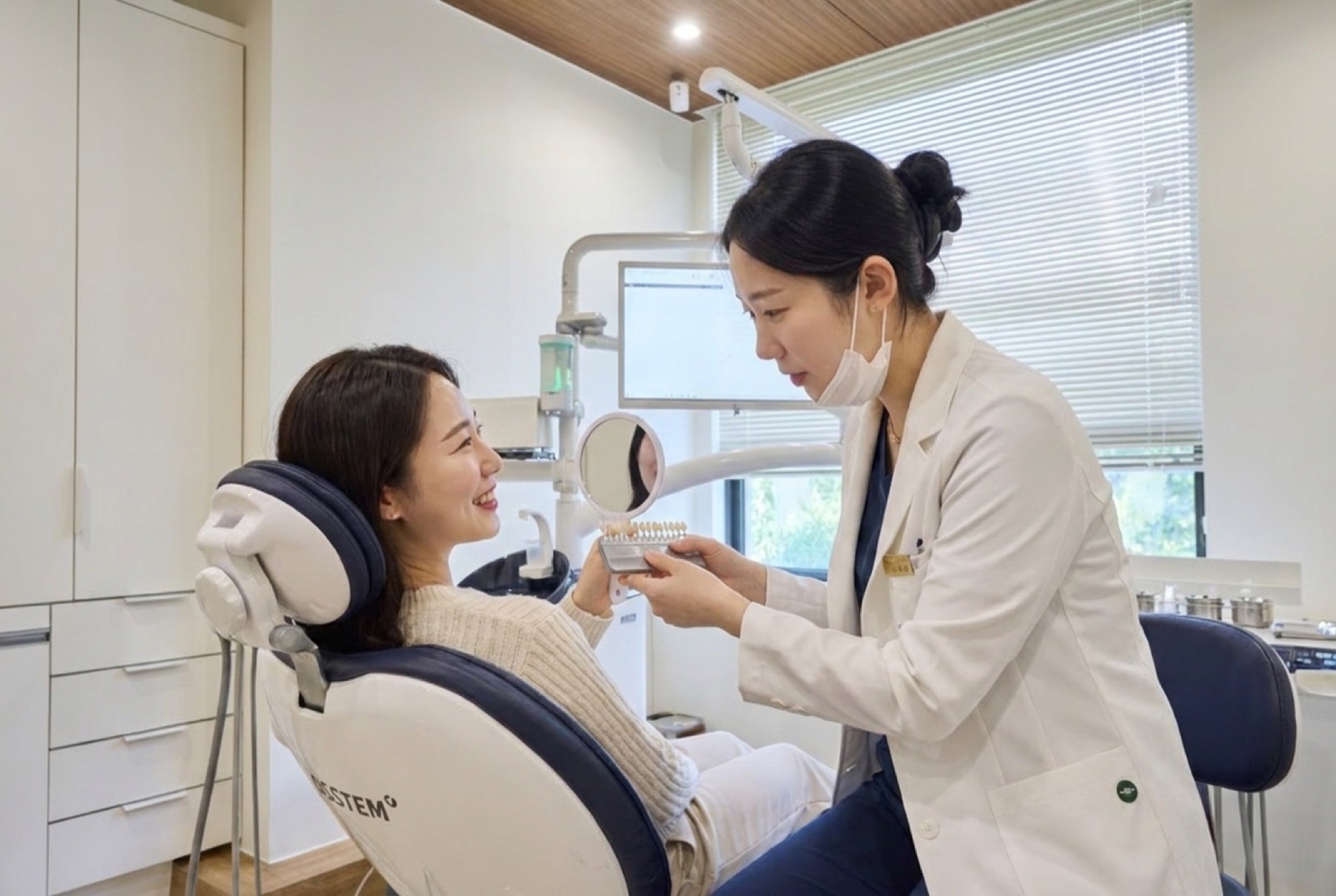
Before bonding, we check the color and shape together right in your mouth (staged photo)
5. What difference does an in-house lab make?
Veneers are made by the dentist and a dental technician working together.
SU Dental Hospital has its own in-house lab, so when we try a veneer in your mouth and the color is a little too bright or the length is off, we take it straight to the lab and rework it.
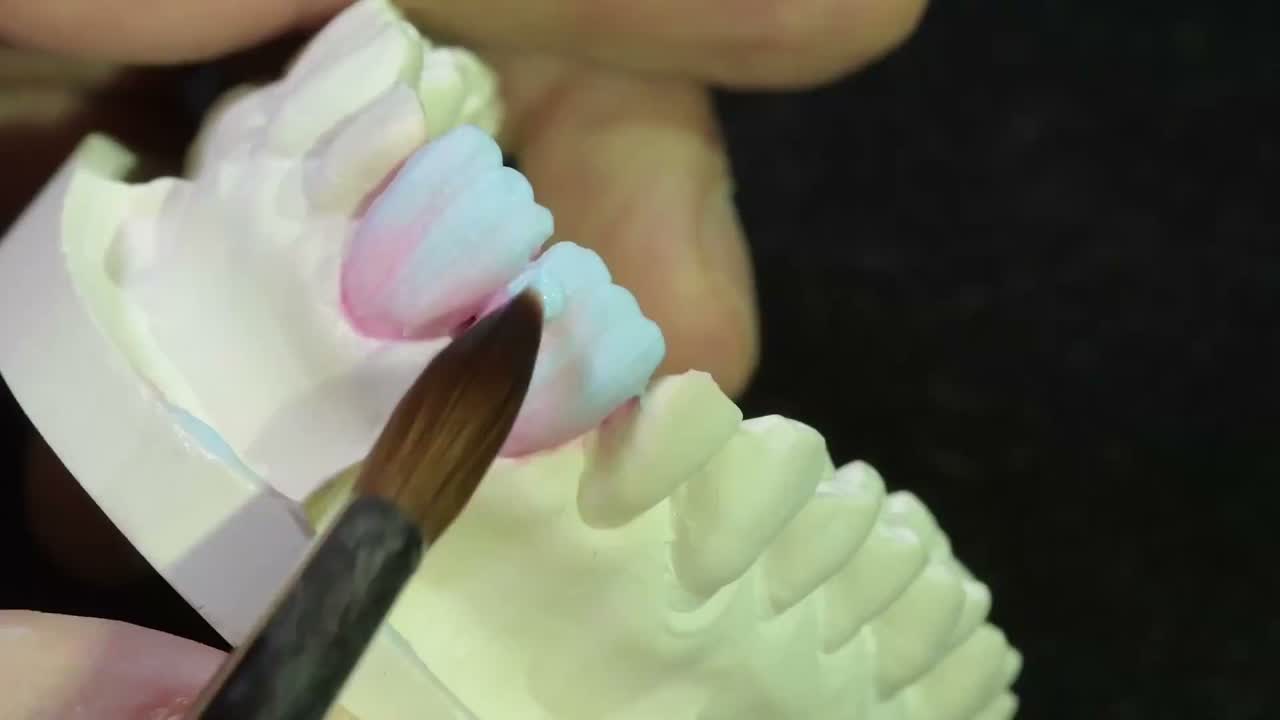
In our in-house lab, ceramic is built up layer by layer to match color and translucency
With an outside lab, each of these checks means waiting several days, but in-house we can repeat them as many times as needed on the same day.
It's also why shaped teeth don't have to stay bare for long before the veneers go on.
Depending on the case, veneers can sometimes be finished in a single day, but we don't cut the checks short to hit a date.
I also handle every step myself, from the consultation to shaping and bonding to the care afterward.
I see each case through from start to finish so the treatment doesn't drift from the plan we first talked about.
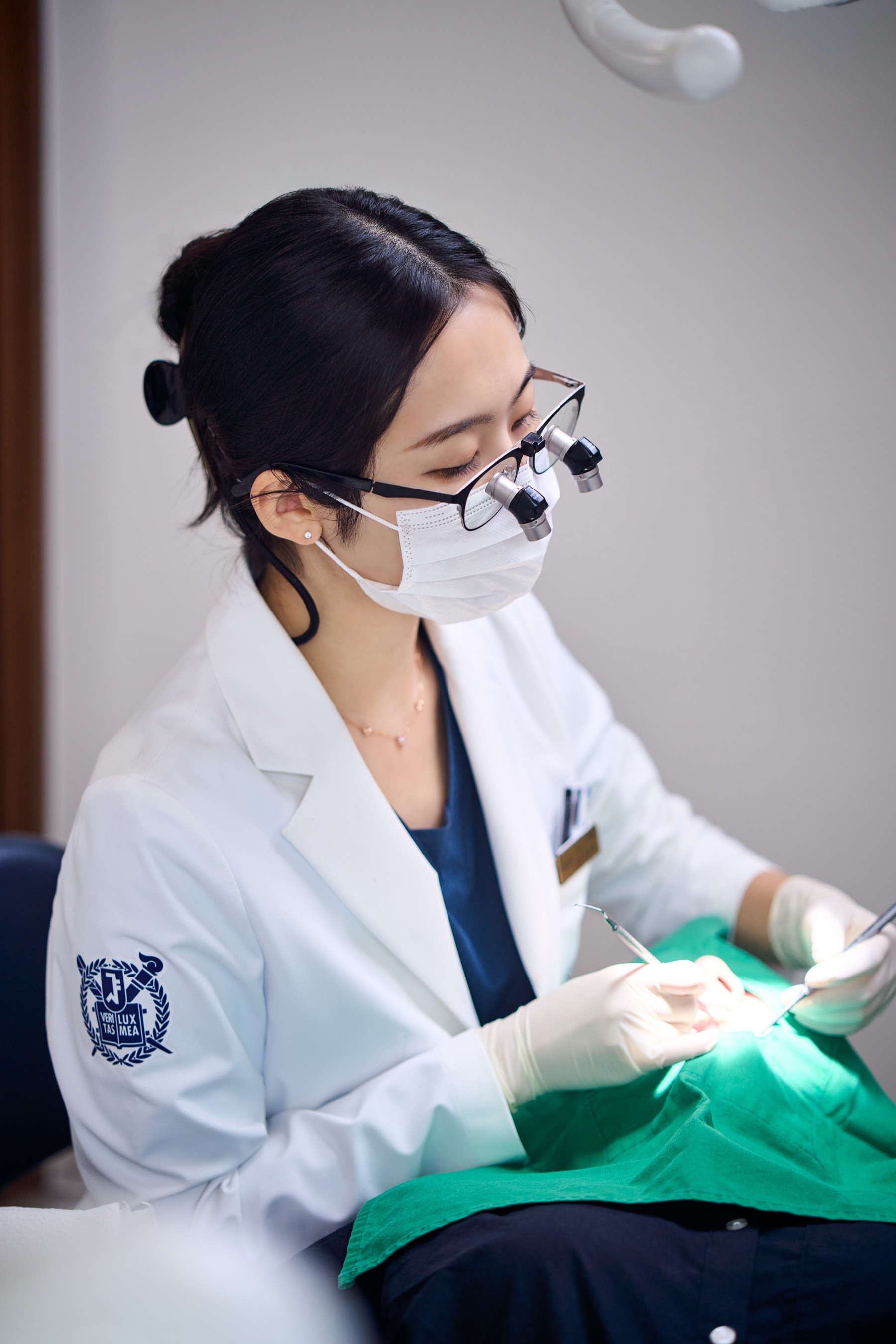
Wearing loupes, I treat the tooth surface and bond the veneers myself
Final thoughts
Whether a clinic does veneers well shows more in the consultation than in its result photos.
If you listen for whether they ask about your concerns first, explain why each tooth is being shaped, and keep the number of veneers to what you need, you'll know what your treatment plan is actually based on.
It doesn't have to be SU Dental Hospital.
Take the time to hear a full explanation at two or three clinics. Deciding once all your questions are answered isn't too late.
I've written about what to look for in reviews in How to Read Veneer Reviews.
Results vary from person to person, and side effects such as sensitivity can occur, so make your decision after a thorough explanation from your dental team.
FAQ
How many clinics should I visit for a consultation?
Two or three should be enough.
If you ask each one where they'll shape your teeth and why, and why they suggest that many veneers, it gets much easier to pick the clinic whose explanation makes sense to you.
Can one-day veneers still be done thoroughly?
The diagnosis and simulation are done at an earlier visit, so only the shaping and bonding happen on the one day.
It works because our in-house lab makes the veneers that day and we refine them right away as we try them in your mouth, and we don't skip any checks to fit everything into one day.
If one-day veneers aren't right for your teeth, I'll tell you up front at the consultation.