“Do my teeth have to be shaved down a lot to get veneers?”
I’m Dr. Suwan Kim, head dentist at SU Dental Hospital. Many people start looking into veneers because the shape or color of their front teeth bothers them, then hesitate when they hear that healthy tooth structure has to be removed.
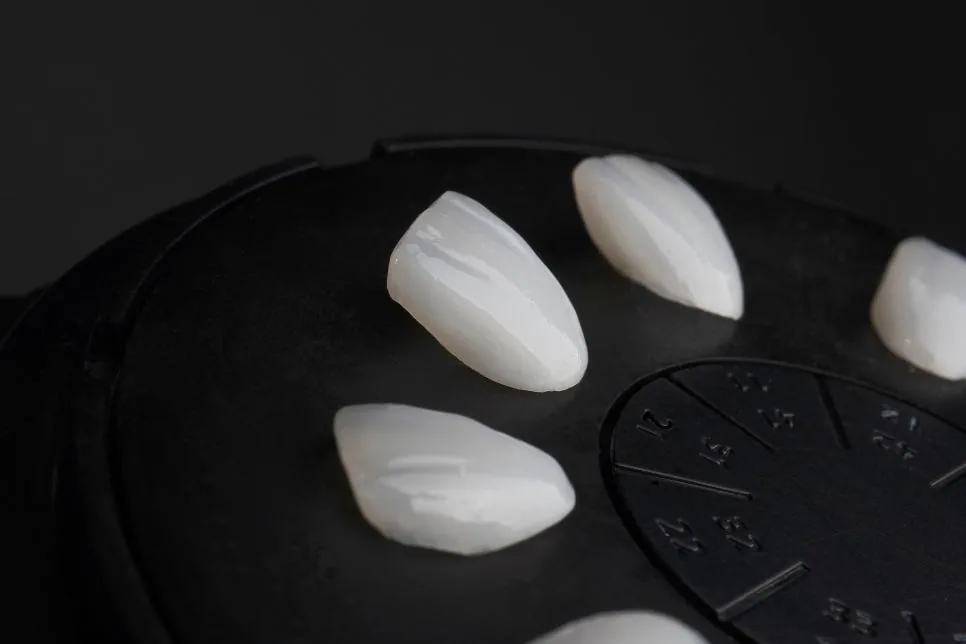
A veneer is a thin ceramic shell bonded to the front surface of a tooth. That means how much of the tooth is reshaped, and how, can affect both the result and how long the tooth itself lasts. Here’s why the amount of reduction matters.
How much tooth is removed for veneers?
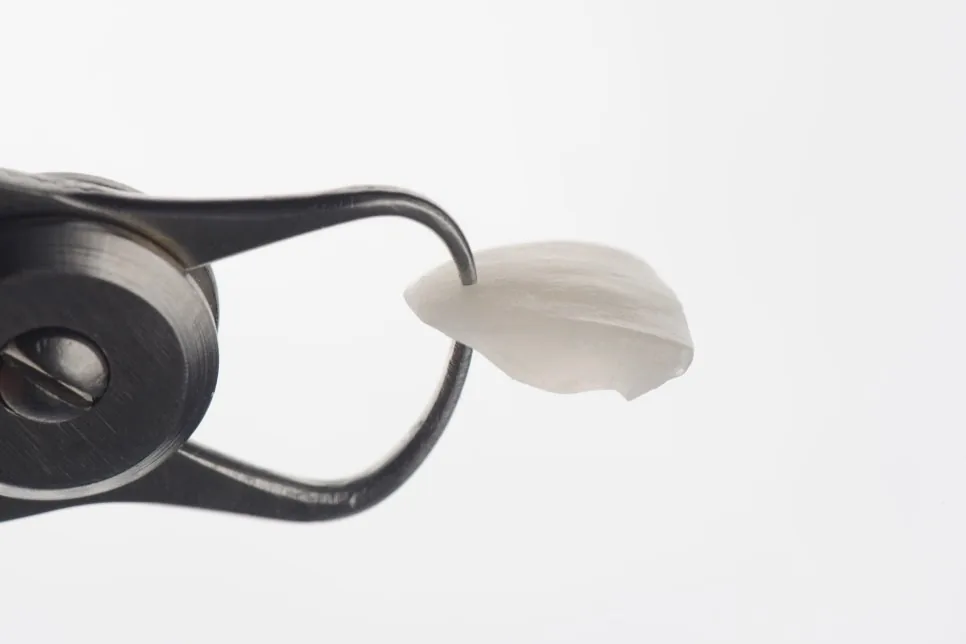
It depends on the approach. Conventional veneers often involve removing about 1–2 mm from the front of the tooth. Minimal-prep veneers remove less—no more than 0.3 mm. No-prep veneers, as the name suggests, involve no reduction at all: the surface is simply treated, and the ceramic is bonded to it.
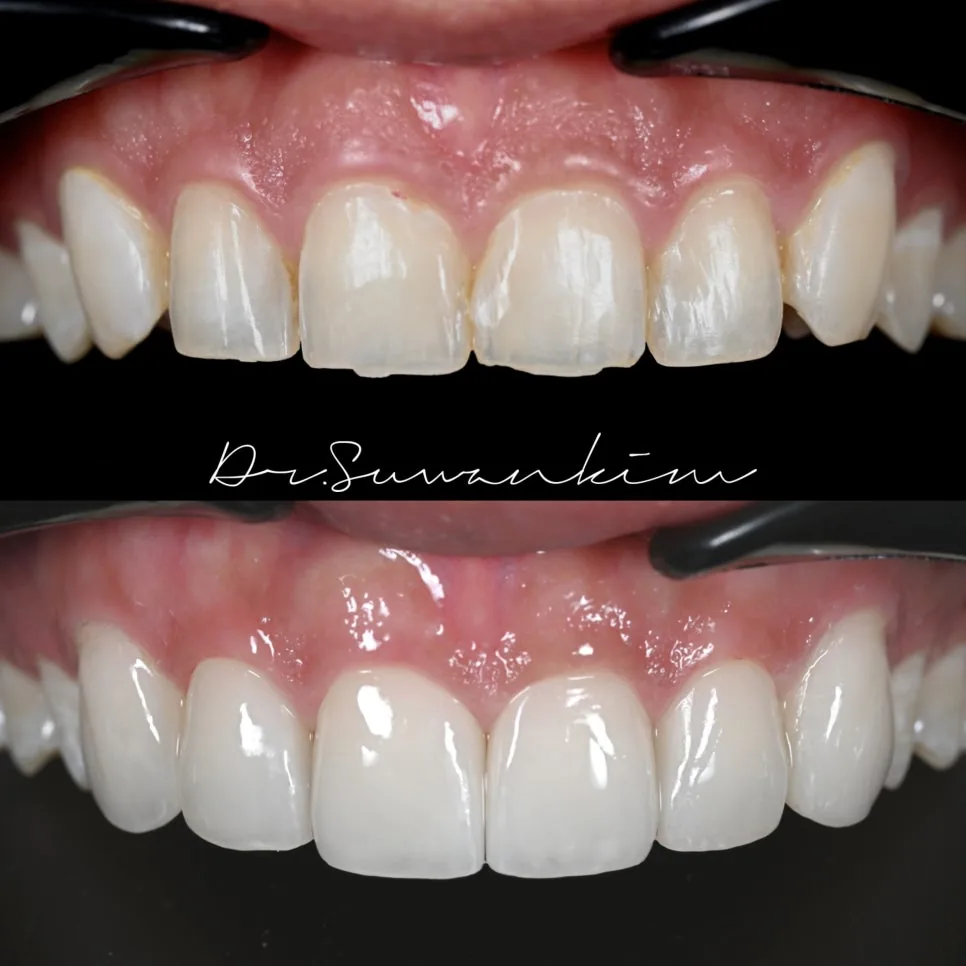
The key reference point is enamel, the hard outer layer of the tooth. With veneers, any reshaping should stay within the enamel. Beneath it lies dentin, and once that layer is exposed, the tooth tends to become sensitive. So before looking at any number, the real benchmark is this: reshape only to the point where dentin isn’t exposed—in other words, where the tooth won’t become sensitive.
Enamel thickness varies across the tooth. At the biting edge of the front teeth (the incisal edge), enamel can be as thick as about 2 mm, so removing around 1 mm there is considered within a safe range. Near the gumline, though, enamel is thin, and the same amount of reduction could expose dentin. Minimal prep comes down to accounting for these differences and finishing within the enamel.
What problems can come from removing too much tooth?

The first is sensitivity.
It’s true that removing too much tooth structure makes sensitivity more likely. But reduction alone doesn’t determine it: some patients who had sensitivity after veneers find it goes away once the veneer is replaced with a crown.
In practice, one factor matters more than people expect—how soon the veneer is bonded after the tooth is prepared. Minimal-prep reshaping is usually light enough that temporary veneers aren’t needed. When a bit more than minimal reduction is needed to get the desired result, patients whose veneers aren’t placed until two to three weeks later occasionally notice sensitivity. That’s why we fabricate veneers in our in-house dental lab and bond them soon after preparation, to help prevent sensitivity.
The second is vulnerability to decay.
When so much has been removed that the enamel is gone and only dentin remains, the tooth becomes highly susceptible to cavities. Decay that starts at the edge of a veneer tends to progress quickly, and the area needing treatment often ends up larger.
The third is the burden of retreatment.
With good care, veneers can last a very long time, but depending on how they’re maintained, they may need replacing after a certain period. There are now laser techniques that remove old veneers while reducing how much tooth is lost in the process. Even so, the less tooth removed, the better for your dental health—because with current technology, tooth structure that’s been removed doesn’t grow back.
So is less always better?
Minimal prep doesn’t mean thinning every surface by the same amount. What matters more than the amount of reduction itself is simulating in advance how your teeth will look once the final veneers are in place. That simulation then guides selective reshaping of only the areas that need it.
So removing just 0.1 mm isn’t automatically the right answer either. The goal is to leave alone the areas that don’t need reshaping and work only where it’s needed for gum health and the planned design. If teeth that protrude or are out of alignment are simply covered as they are, for example, the veneers end up thicker and the teeth can look unnaturally large. A bulky margin near the gumline, in particular, tends to trap food and plaque, which can lead to gum inflammation.
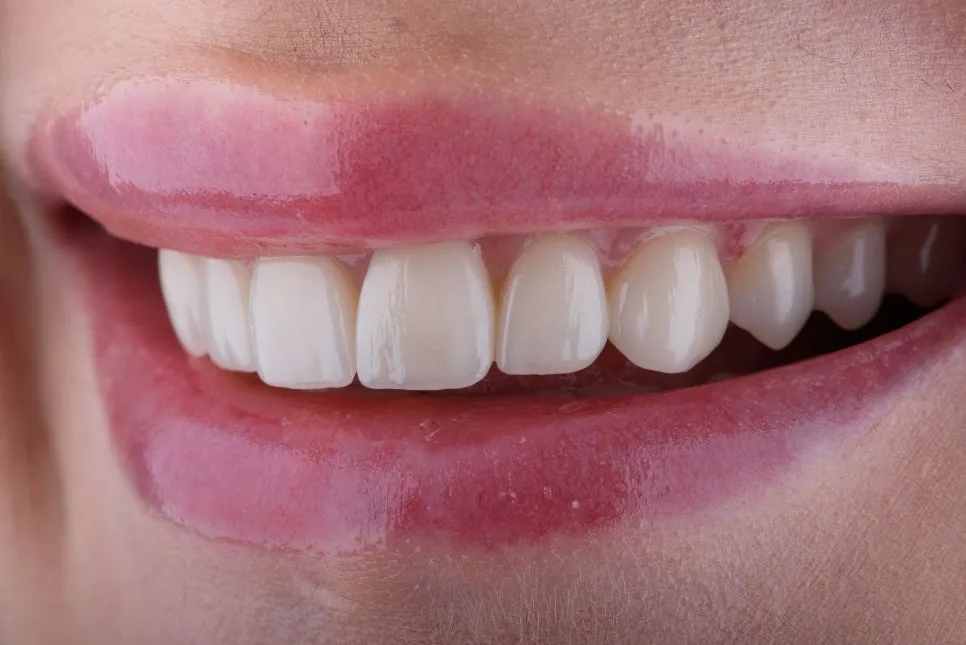
In other words, failing to reshape the areas that need it can actually harm your gums. That’s why, before treatment, the position and angle of each tooth, enamel thickness, your bite, and your gumline all need to be evaluated together.
Previewing the final shape through a simulation lets us decide ahead of time which areas to reshape and by how much. In our practice, for cases other than retreatment or same-day veneers, we sometimes include this simulation step. By setting the target shape first and reshaping only what’s necessary, we can cut down on unnecessary tooth removal while aiming for a natural-looking result.
Final thoughts
Veneers can be a good way to change the color and shape of your teeth. But how much tooth is removed, and how, affects sensitivity, the risk of decay, and even the burden of future retreatment. No-prep and minimal-prep veneers matter because, ultimately, they protect the enamel on the surface of your teeth.
That said, avoiding reduction shouldn’t become a goal in itself. The key is to reshape only as much as your teeth truly need—simulating the finished result in advance and working only on the areas your particular teeth require. How quickly the veneers are bonded after preparation also affects how your teeth do after treatment.
If you’re considering veneers, I’d encourage you to look not only at how the final result will look but also at how much of your natural teeth will be preserved. Take the time for a thorough examination and consultation so you can choose an approach that keeps your teeth healthy for the long term.
This article was written by SU Dental Hospital and complies with Article 56 of the Korean Medical Service Act and related medical advertising regulations. Every procedure carries a risk of side effects that varies from person to person, so please talk it through fully with your dentist before making a decision.