
Hello, I’m Dr. Suwan Kim, chief dentist at SU Dental Hospital. There’s a moment I see again and again in consultations. A patient is chatting comfortably, and then, as soon as the conversation turns to their front teeth, they smile with a hand lightly covering their mouth.
“The tooth next to my front tooth looks so much smaller than the rest.”
“There’s a gap between my front teeth, and it bothers me every time I’m in a photo.”
Most people who come in with concerns like these have already looked into veneers at least once. But once we start talking, it often turns out they have as many worries as hopes. Am I having healthy teeth shaved down for nothing? Will people be able to tell?

So today, for anyone researching veneers because of small front teeth, I want to offer something more candid than a basic explainer. I’ve written this the way I’d actually talk to a patient sitting across from me in the consultation room. I’ll cover not only when veneers are a good fit, but also when another approach makes more sense.
1. Why do small front teeth stand out so much?
A front tooth can look small for more reasons than most people expect. Sometimes a tooth simply developed smaller than the others from the start—a condition called microdontia. In other cases the tooth is a normal size, but gaps around it make it look smaller by comparison. And if you’ve ground your teeth for years or tend to bite through food with your front teeth, the edges may have gradually worn down, leaving the teeth shorter. These can all look like the same “small front tooth,” but a different cause calls for a completely different approach.
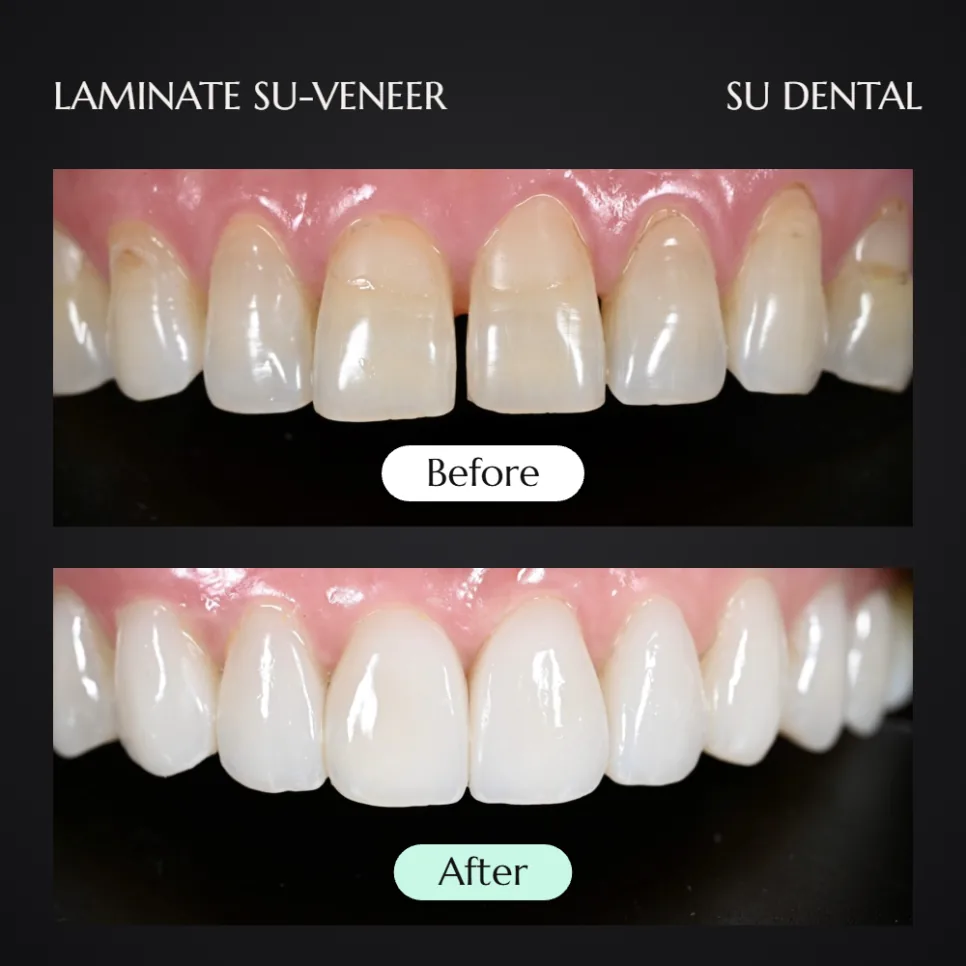
A case I see especially often is when the tooth right beside one of the two center front teeth is small. Because of the difference in size, the line of the teeth looks uneven when you smile, and gaps can open up between them. In a case like this, veneers can be a way to bring the small tooth’s size and shape in line with its neighbors by bonding a thin layer of ceramic to its surface.
Think of it less as trimming away excess to make things fit and more as filling in what’s missing to restore balance. That’s why, compared with other veneer cases, small front teeth can relatively often be treated in a way that preserves more of your natural tooth.
2. When veneers are a good fit
When I think back to the patients with small front teeth for whom I’ve recommended veneers, most were in one of these situations:
- The difference in tooth size or shape is noticeable
- The gap between the front teeth isn’t large
- Whitening alone can’t achieve the shade they want
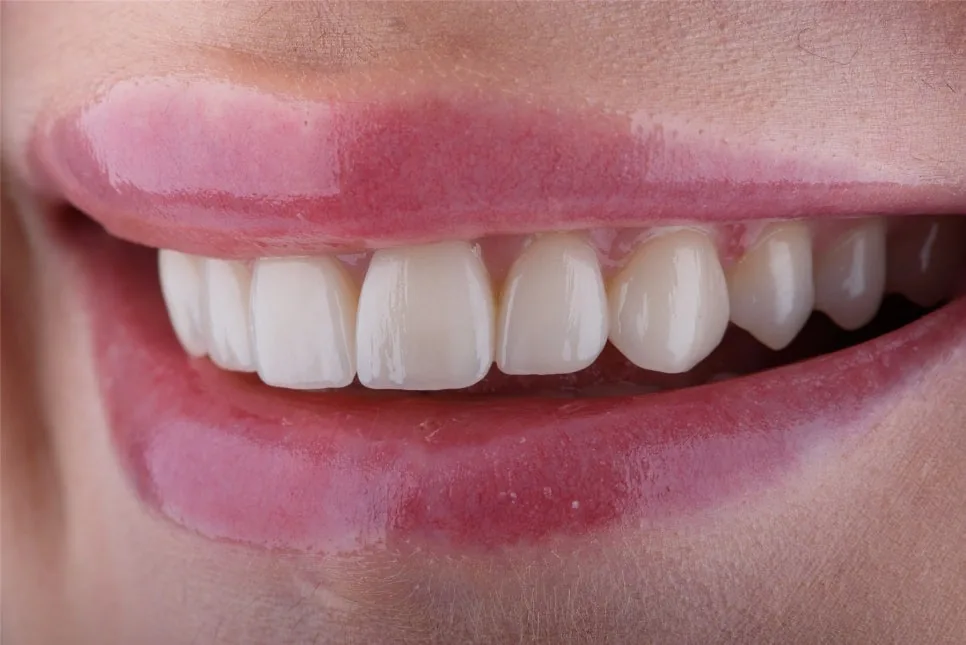
In cases like these, shape and color can both be addressed without removing much of the tooth. A small tooth also means there’s room to add material, so many of these cases can be done with no-prep or minimal-prep veneers—veneers placed with no shaving of the tooth surface, or with only a very slight amount.
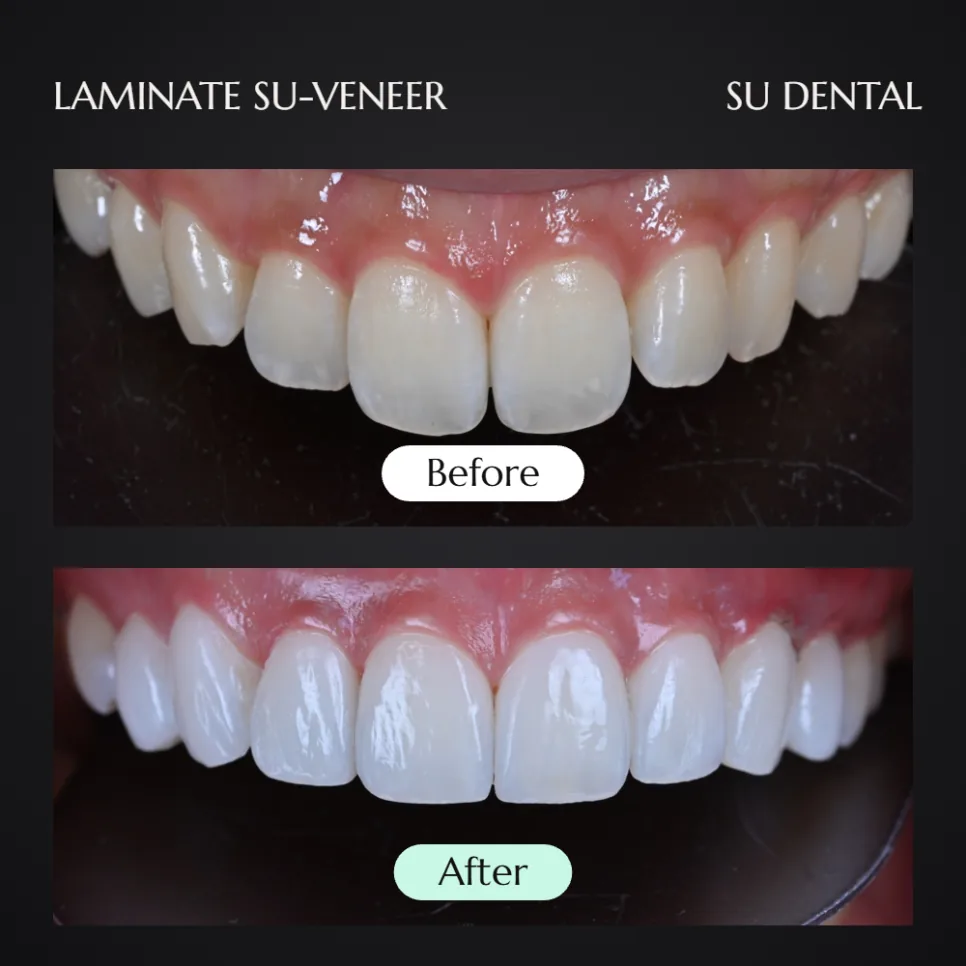
That said, what I focus on most isn’t matching size for its own sake but making the result look natural. If you just make a small tooth bigger without thinking it through, it ends up being the one tooth that stands out. So rather than looking at a single tooth, I also consider the shape of the face, the lip line, and how much of the teeth show when you smile. On the day of the consultation, I first show patients a preview of the final result with an AI smile simulation, and I choose the shade with their personal color—the natural tones of their skin, hair, and eyes—in mind.
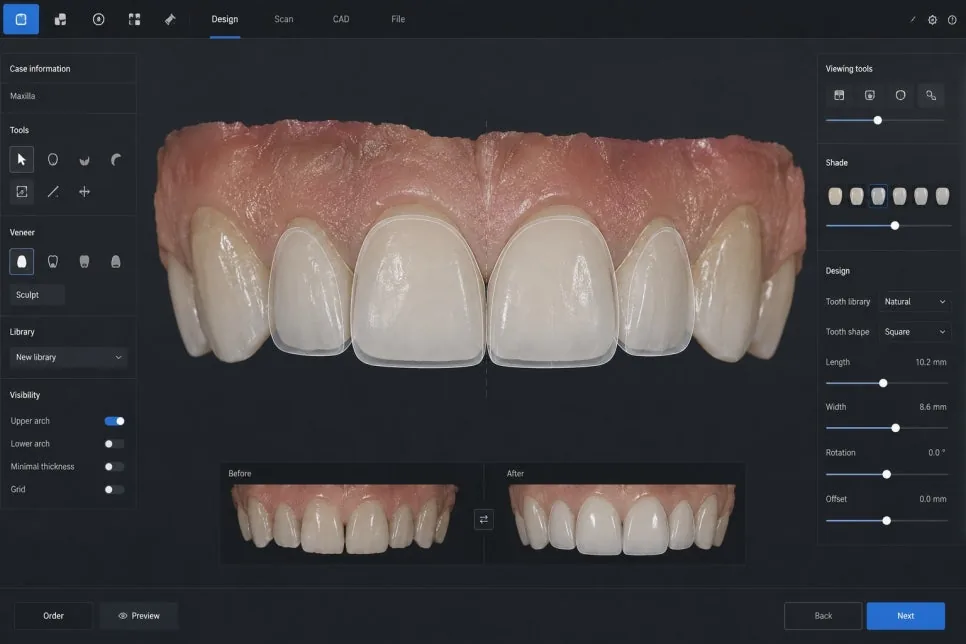
Patients who see the preview on screen often tell me, “That looks much more natural than I expected.” I find that simply seeing the result before you begin does a lot to ease the vague anxiety people feel ahead of treatment.
3. When I’ll suggest a different approach first
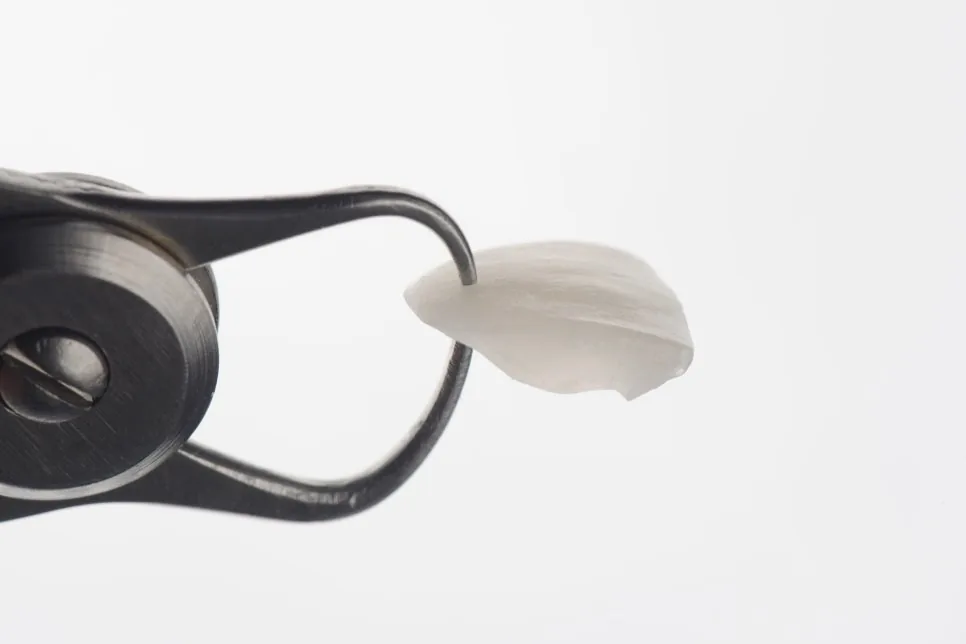
Some people come in for a veneer consultation and leave having heard that another treatment needs to come first. When that happens, they often look a little disappointed and ask:
“So does that mean I can’t get veneers?”
That’s not what it means. It means that adjusting the order a little, instead of placing veneers right away, is better for both the result and the health of your teeth.
For example, if there’s a wide gap between the front teeth and you try to close it with veneers alone, the teeth can end up looking too wide. In that case, closing the space first with clear aligners and then adding veneers looks much more natural.
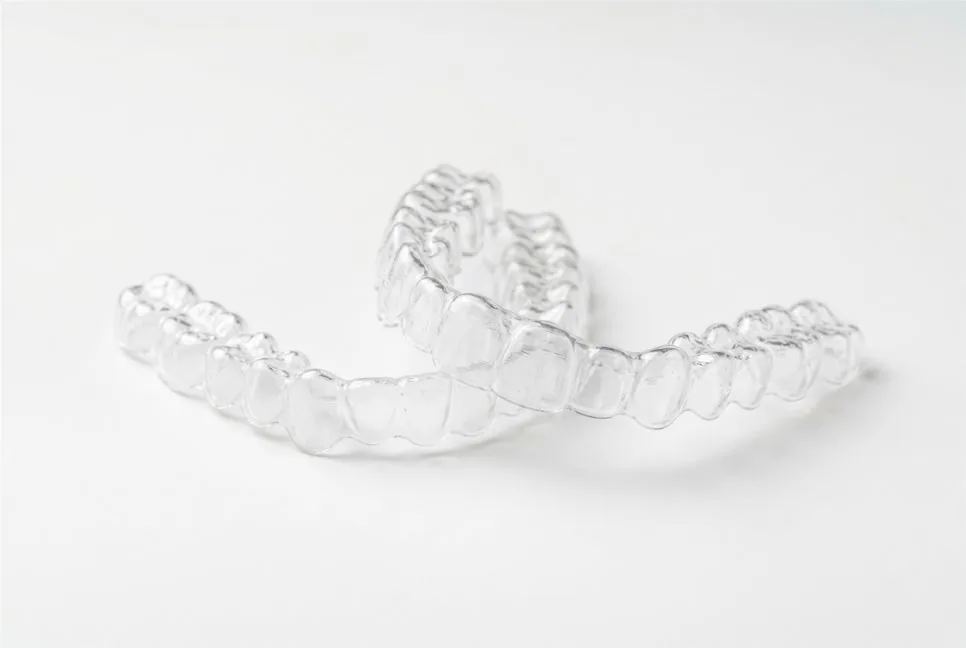
The same goes for teeth that are significantly crooked. If there’s gum inflammation or untreated decay, that needs to be taken care of first. And if you grind your teeth heavily or have a deep bite—where the upper front teeth overlap the lower ones a lot and take on heavy force—the ceramic can be put under strain, so the plan needs to be worked out even more carefully.
Whitening is another thing you’ll want to consider alongside veneers. Veneers keep their color once they’re bonded, so if you’d also like your other teeth brighter, it’s best to finish whitening first and then have the veneers made to match that shade. Even with the same treatment, simply following the right order can make a real difference to the result.
4. If you want them to last, aftercare matters even more
After treatment, many patients ask, “So I don’t have to think about them anymore?” Even if the ceramic itself stays intact, the margin where the veneer meets the tooth is still your own natural tooth and gums, so it needs regular care.
When you brush, gently sweep along the edge near the gums, and floss as well. If you grind your teeth, simply wearing a night guard while you sleep can greatly reduce the stress on your veneers.
I strongly recommend a checkup every six months to a year. Minor lifting or changes at the margin can often be fixed easily if they’re caught early. The dentist who starts your treatment should personally see you through your follow-up care—that’s a principle I always try to keep.
In closing
Far more people quietly live with small front teeth for years than you might think. I often hear that it bothers them every time they smile, to the point that they’ve grown self-conscious about their expression in photos. Veneers are clearly a good answer for some, but for others, whitening, orthodontics, or a simple resin treatment is enough.

I’ve spent a long time worrying about my own smile, too, so I understand a little of how that feels. That’s why, whenever I plan treatment, I start by asking myself what I’d do if these were my own teeth, and every consultation begins with asking what bothers you most when you smile. I’ll work through it with you so that you get only as much treatment as you need—and can smile in a way that feels most like you.
It doesn’t have to be SU Dental Hospital. Take the time to get a thorough explanation from two or three clinics; it won’t be too late to decide once all your questions have been answered.
Thank you for reading. This has been Dr. Suwan Kim, chief dentist at SU Dental Hospital.
[Related reading]
- Best 1. About us
- Best 2. Veneers: How much of the tooth needs to be shaved?
This post was written by SU Dental Hospital and complies with Article 56(1) of the Medical Service Act and all other laws governing medical advertising. Any surgery or procedure may involve side effects that vary from person to person, so please make your decision carefully after receiving a thorough explanation from your dental team.
This article was written by SU Dental Hospital and complies with Article 56 of the Korean Medical Service Act and related medical advertising regulations. Every procedure carries a risk of side effects that varies from person to person, so please talk it through fully with your dentist before making a decision.