
"Doctor, cold water makes my teeth ache like crazy. I looked in the mirror, and the gum around my lower front teeth has sunk in. It looks like the whole root is showing."
Receding gums bring a lot of worried people to my chair. The teeth look longer than they used to, even a breeze can set them off, and everyday life gets uncomfortable. Many people assume the exposed spot has to be covered with something right away, or the look bothers them enough that cosmetic treatment is the first thing on their mind. At SU Dental Hospital, though, we don't just cover up what you can see. We look for the reason the gums receded first, and we only suggest the treatment you actually need. Below I explain why receding gums make teeth sensitive and how a gum graft can help.
Why are my gums receding?
When the gum pulls back and the root of the tooth becomes exposed, dentists call it gingival recession, or gum recession. Once that happens, cold water or cold air can send a sharp zing through the tooth. The crown, the part you normally see, is covered in hard enamel that shields it from outside stimulation. The root, which is meant to stay tucked under the gum, has no enamel, so temperature changes and pressure reach the nerve inside more quickly.
The cause of recession differs a lot from person to person. The most common one I see is gum disease such as periodontitis. Long-term inflammation breaks down the bone that supports the teeth, and the gum sinks down along with it. Habits can do it too. Brushing hard, side to side, with very stiff bristles, grinding your teeth at night or clenching without realizing it can put too much force on the area where tooth meets gum, and over years the gum can recede. Sometimes there's no disease at all and the gums just get thinner with age. It often starts as mild sensitivity. Left alone, the exposed root can wear down or become hard to keep clean, which makes cavities much more likely.
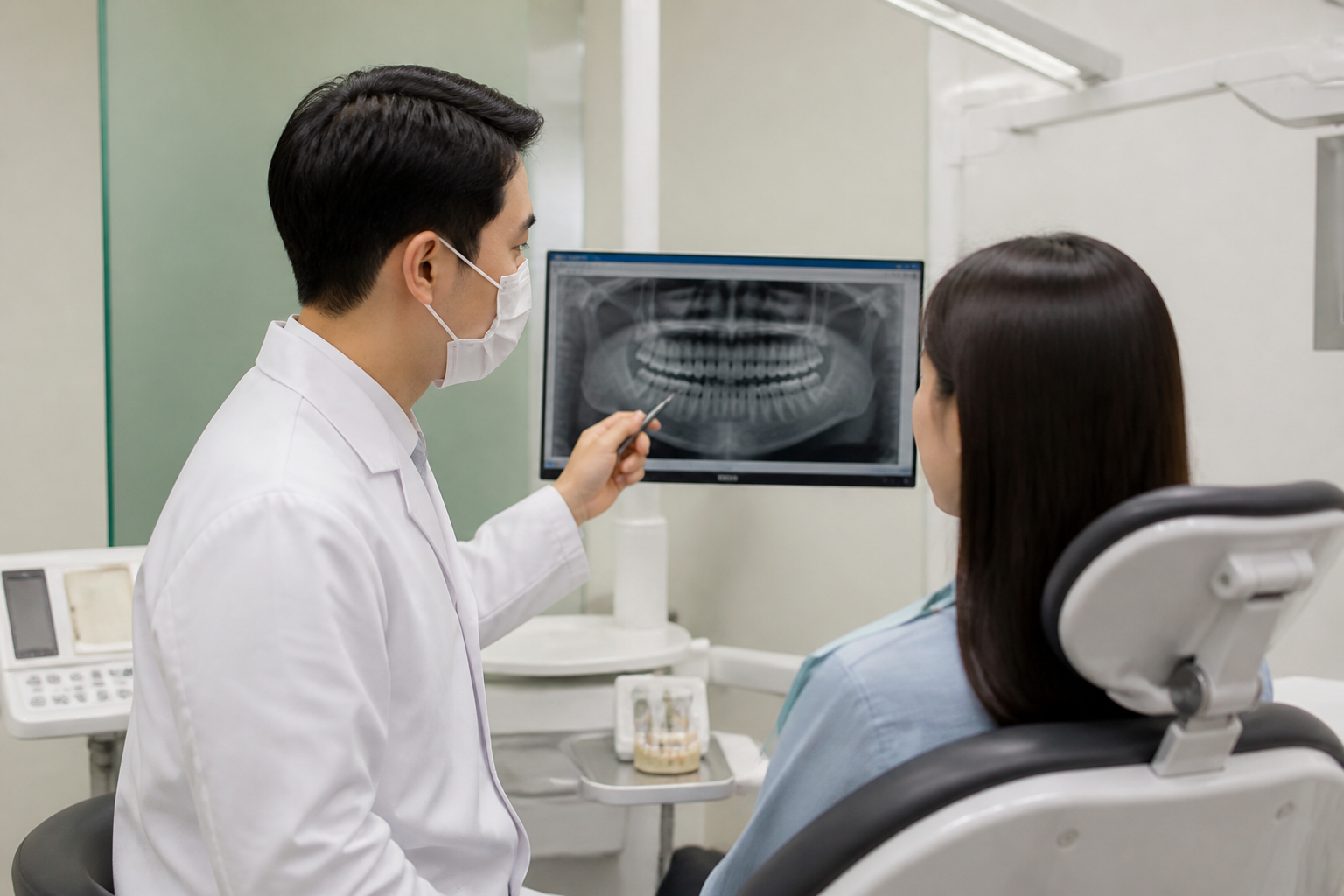
Using a panoramic X-ray to show the bone level and explain what caused the recession
Can't I just cover it with veneers?
When receded gums make the teeth look longer, some patients understandably ask about reshaping the tooth surface and bonding something over it. Some come in already planning on cosmetic work, like veneers at an Apgujeong clinic, especially when recession around the front teeth has left dark gaps between them (black triangles) or made the teeth look long and narrow.
Covering an exposed root with a restoration or composite resin isn't always the right call, though. If the underlying problem is gum that's too thin and too scarce, forcing a covering over the tooth can backfire. Food gets trapped easily where the restoration meets the gum, which can inflame the gum and make the recession progress even faster. If the main cause is a V-shaped notch worn into the tooth at the gum line from brushing the wrong way (dentists call this cervical abrasion), filling that notch with tooth-colored composite resin is a fairly simple fix that's often enough to calm the sensitivity. In many cases there's no need to cover the whole tooth. So even if what you want is a better-looking smile, the first steps are to have the remaining bone and the thickness of your gum tissue properly assessed, and to get gum treatment that settles any inflammation.
How do you bring receding gums back?
If gum disease or other causes have left the gum very thin and pulled back so far that a lot of root is showing, we can consider surgery called a gum graft (gingival graft). The goal is to cover the exposed root and turn paper-thin gum into thicker, sturdier tissue so it doesn't recede any further.
Here's how it usually works. I carefully take a small piece of firm, healthy tissue from the roof of your own mouth (subepithelial connective tissue), place it where the gum is lacking, and stitch it in with very fine sutures. Because it's your own tissue, rejection is less of a concern, and once it heals it blends in naturally with the gum around it. According to clinical data from professional groups such as the Korean Academy of Periodontology, connective tissue grafts get a good blood supply, and their track record for covering exposed roots is considered fairly good.
For patients who don't like the idea of having tissue taken from the palate, we sometimes use a different procedure that thickens the gum with a cross-linked collagen matrix, a manufactured material, instead. In 2023, Korea's Ministry of Health and Welfare reviewed it as a new health technology and recognized it as safe and effective. It also means no extra wound on the roof of your mouth. Which method can be used depends on your bone, how much root is exposed and how thick the surrounding gum is, and results vary from person to person, so a careful diagnosis is essential.
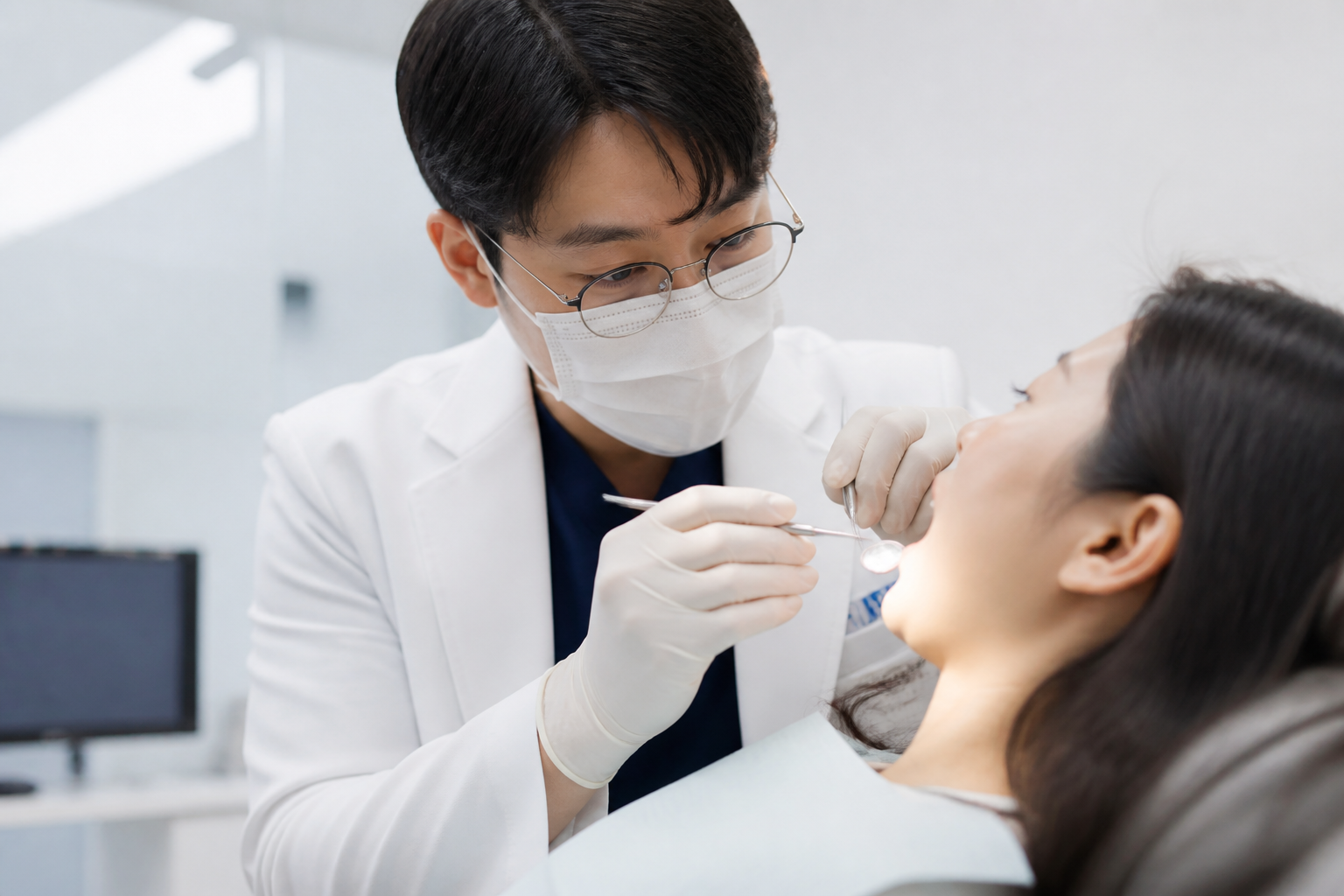
Measuring how far the gum has receded with a periodontal probe
How long does surgery take, and does it hurt?
Before surgery, we start with a professional cleaning (scaling) and basic gum treatment to clear out any inflammation in your mouth. If the gum is still inflamed, the graft has a hard time attaching to the tissue underneath and healing in place. On the day of surgery, we numb the area thoroughly with local anesthesia, take the tissue, place it and stitch it carefully. All of that takes about an hour, depending on how large and tricky the area is.
You'll come back about 1 to 2 weeks later to have the stitches removed. The graft usually needs about a month to settle in and go through the first stage of healing. It can take several months for the gum to fully mature and bond firmly with the tissue around it, so steady care matters. A few things will help you heal safely:
The surgical site is very sensitive. Don't brush that area until it heals. Rinse gently with the antiseptic mouthwash we prescribe instead.
Don't chew anything hard or tough on the surgical side until the graft has fully settled.
Smoking constricts the tiny blood vessels in your gums and reduces blood flow to the graft. I strongly recommend not smoking for at least a month, both before and after surgery.
For 2 to 3 days after surgery, you may have swelling or pain at the palate or the graft site, and how much varies from person to person. Even if it's uncomfortable, take your prescribed medication on schedule until it's finished.
Avoid spitting forcefully or sucking hard through a straw. Both raise the pressure in your mouth and can make the surgical site bleed.
Summing up
That covers why receding gums cause sensitivity and how a gum graft works. If your teeth zing every time you brush, if you've started dreading cold drinks, or if your teeth look noticeably longer than they used to, your gums may be sending up a warning. But sensitivity doesn't automatically mean you need surgery. As I mentioned, sometimes simply filling the notch with composite resin is enough, and very often just fixing how you brush can stop the recession from getting worse.
At SU Dental Hospital, we look closely at your mouth, and if you don't need a procedure or surgery right now, we won't push you into one. There's no need to book a visit and decide on treatment just because you read this. Give it a few days and ask yourself honestly: is the sensitivity or discomfort getting in the way of daily life? When you look in the mirror, do your gums seem to be creeping further down? If you'd like to know the exact cause and the most conservative way to manage it for your mouth, come in for a checkup at a time that works for you.
Frequently asked questions
Do I really need a cleaning before gum surgery?
Yes. Clearing up inflammation in your mouth before surgery is essential. If the gum is still inflamed, the graft has a hard time taking properly, so at our clinic we always do a cleaning and basic gum treatment first.
My tooth has a V-shaped notch and it's sensitive. Do I need surgery?
If it's cervical abrasion, a notch worn into the tooth at the gum line from habits like brushing the wrong way, you don't necessarily need surgery. Filling the notch with tooth-colored composite resin is a fairly simple treatment that's often enough to relieve the sensitivity.
I'm nervous about having tissue taken from the roof of my mouth. What are my options?
If that worries you, a procedure that thickens the gum with a collagen matrix, a manufactured material, may be an option. The right approach depends on the condition of your gums, though, so I recommend getting a thorough exam with us first.
How long does it take to recover from a gum graft?
You'll come back about 1 to 2 weeks after surgery to have the stitches removed, and the first stage of healing, while the graft settles in, usually takes about a month. It can take several months for the gum to fully mature and bond firmly with the surrounding tissue.
Sources
I referred to the public sources below while writing this article. These organizations have not certified or endorsed our clinic, and they do not vouch for the content of this article.