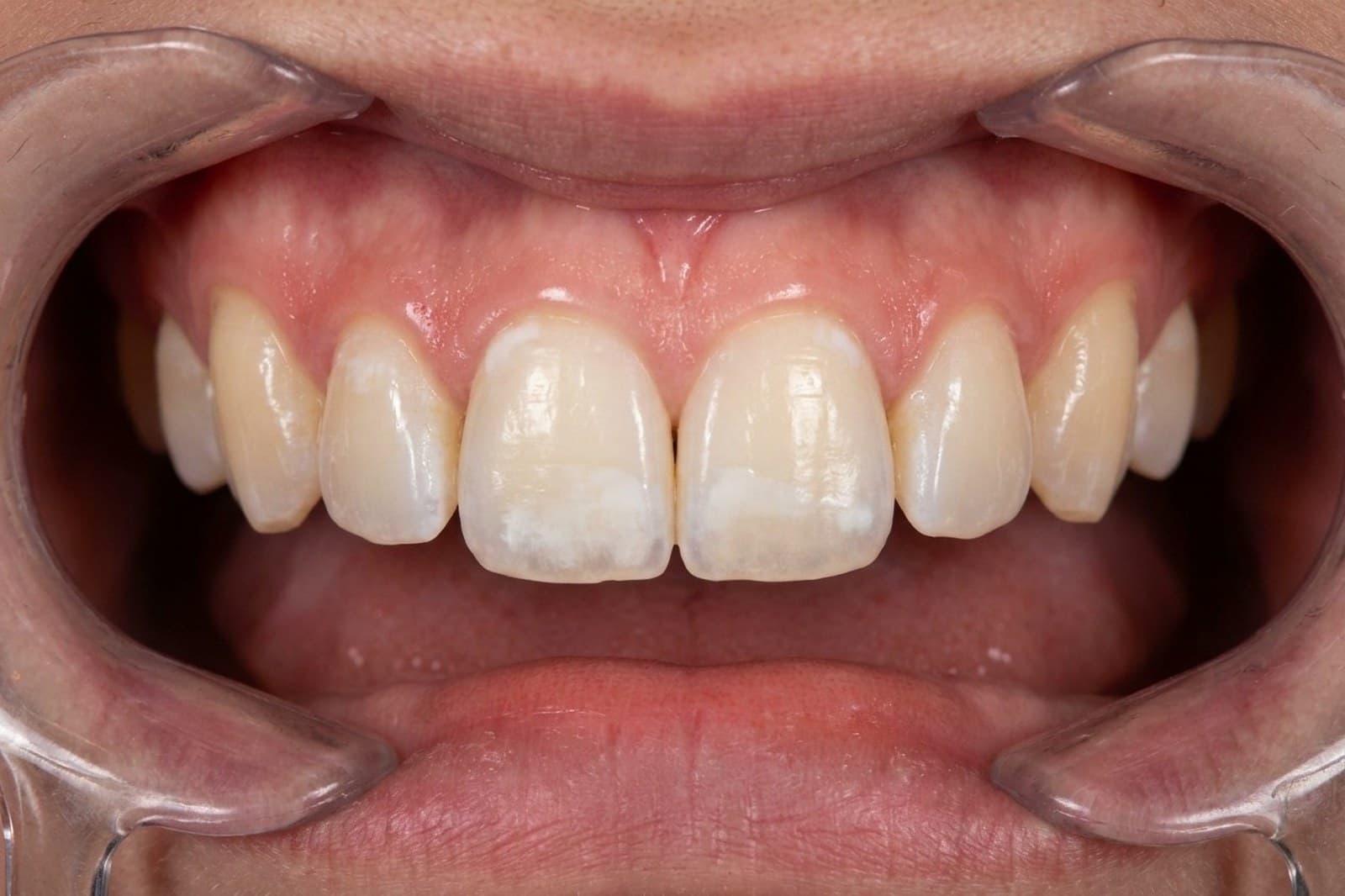
"Doctor, I've got white spots on my front teeth. I brush three times a day and they still won't go away. Is this a cavity?"
Patients hold up a mirror, a little hesitant, and ask me this regularly. They're pointing to cloudy patches on the tooth surface that look like a smudge of chalk dust. We call these white spots, and because they show every time you smile or talk, they can quietly wear on you. They usually don't hurt, and the tooth isn't suddenly sensitive. Most people come in because they're self-conscious about how it looks and worry about what others notice. And when daily brushing doesn't make the spots go away, it's natural to wonder if something serious is going on. Here's the same explanation I give in the treatment room: why these white spots show up on front teeth, whether they actually need treatment, and, if you do treat them, how composite resin can help.
What causes white spots on front teeth?
White spots on the front teeth come from two main sources. The first is demineralization, where minerals leach out of the tooth surface. The outside of each tooth is covered in hard enamel. If teeth aren't cleaned well, bacteria in plaque feed on leftover food and make acid, which slowly dissolves minerals like calcium and phosphate out of the enamel. This is how an early cavity starts. The enamel turns porous, light no longer passes through it normally and scatters instead, and the area looks white. We see this very often in people who wore braces for a long time, because it's hard to get a toothbrush around the brackets.
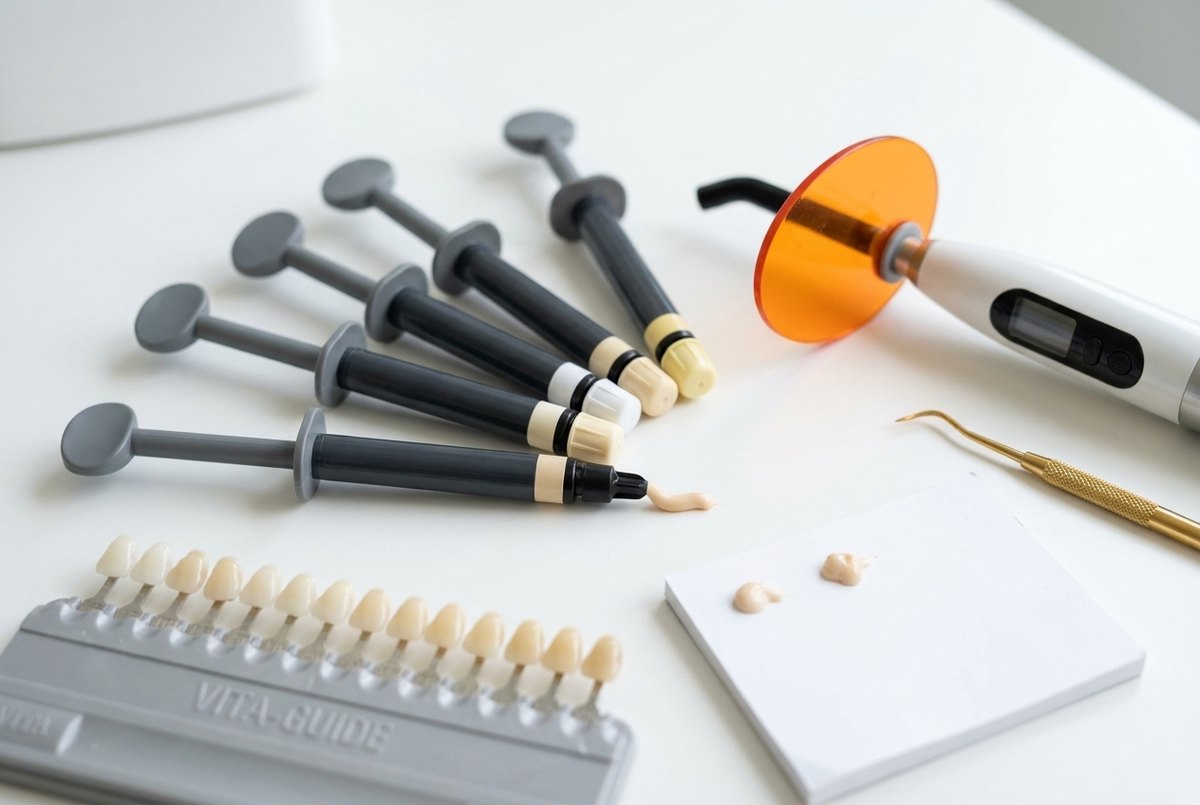
Composite resin, a shade guide and a curing light used to treat white spots
The second source goes back to infancy and early childhood, when the adult teeth are still forming inside the gums. Oral health literature, including material from the Korean Society of Dental Hygiene, explains that too much fluoride while permanent teeth are developing can cause dental fluorosis, which shows up as white patches or brown lines on the teeth. Fluoride is excellent for preventing cavities, but too much of it while the teeth are developing can leave these marks behind. A hard knock or injury to the front teeth in childhood can also leave a white patch on the adult tooth that grows in later. The first thing I always tell patients is that having these spots doesn't mean you have to treat them right away. They're often a structural mark rather than a disease that keeps getting worse. If you can chew normally and they don't really bother you, it's fine to leave them alone.
How resin treatment works
If the spots are so noticeable that you find yourself covering your mouth when you talk, or they're otherwise getting to you day to day, treatment is worth considering. One of the most common first-line options in dental offices is composite resin. Resin treatment for white spots is done in one of two ways, depending on how deep the lesion goes and what condition it's in.
If the spot is fairly shallow and the surface is still smooth, which is typical of early demineralization, resin infiltration may work. The big advantage is that no tooth structure is drilled away. We treat the surface with a special agent that opens up tiny pores, then let a thin, liquid resin soak deep into the weakened enamel. Once that resin hardens, the area bends light much like healthy enamel does, so the white spot fades and blends in with the color of the surrounding tooth.
If the spot sits deep in the enamel, or the surface is already rough and pitted, infiltration alone isn't enough. In that case, I carefully smooth away a thin layer of the white, porous area with dental instruments. Then I fill the space with regular tooth-colored composite resin matched as closely as possible to your tooth, and harden it with a special light (this step is called light curing). Last, I polish the surface so it feels as smooth as the natural tooth. Which approach is right for you is decided after I examine the tooth and confirm its condition in person.
Does it hurt, and how long does it take?
Once they're in the chair, patients mostly want to know two things: will it hurt, and how long will it take. Resin treatment for white spots on the front teeth is mild compared with treating a deep cavity or having a root canal. With resin infiltration in particular, there's no drilling, so most people don't even need numbing. Smoothing the surface and filling it with resin usually stays within the enamel, the outermost layer of the tooth, so sensitivity and discomfort tend to be minimal. That said, depending on how sensitive your teeth are to begin with and how deep the spot goes, you may feel brief sensitivity from water or air during treatment, and how much discomfort people feel varies from person to person. If you're very anxious about dental work, or the spot is deep enough that it might be uncomfortable, we numb the area first so you can relax through the treatment.
How long it takes depends on how many spots there are, how big they are and which method we use. For one or two front teeth, though, the whole thing is usually done in a single visit of 30 minutes to an hour. There's no impression to take and no waiting days for a lab to make a restoration, so you don't have to keep coming back. It's easy to fit in even with a packed schedule. One thing to watch on the day of treatment: resin can be damaged if it takes too much force right after it hardens, so avoid biting hard or chewy food with your front teeth.
Other options and whether you need veneers
Sometimes the white spots spread across several front teeth, or the discoloration runs so deep that resin alone can't blend the edges into the healthy tooth around it. Trying to cover too much with resin can actually leave the surface looking blotchy. That's when some patients who've searched online for no-prep veneers in Apgujeong come in and ask, "Do I need veneers like celebrities have to hide these spots?"

Checking white spots on the front teeth before resin treatment
Veneers are thin, precisely made ceramic shells shaped like teeth. They're bonded to the front of the tooth, either after a thin layer is smoothed off or with no smoothing at all, a bit like putting on a press-on nail. Because they change color and shape at the same time, patients tend to be very happy with how they look. With newer techniques, no-prep veneers, which need no reshaping or only a tiny bit, are now widely considered an alternative. But I don't tell patients veneers are always the answer. Veneers are one of several options to weigh carefully as a next step, when the affected area is large, the discoloration is severe and resin has clearly reached its limit. With any cosmetic treatment, the most important rule is to plan around keeping as much of your natural tooth as possible, without putting your dental health at risk.
- Before your visit, make a note of the oral care products you use at home, like your toothbrush, fluoride mouthwash and toothpaste. Telling us helps a lot in figuring out what's causing the demineralization and in giving you advice on daily habits.
- On the day of resin treatment, it's best to skip heavily pigmented food and drinks like curry, black coffee, black tea and red wine. This helps prevent early staining on the surface.
- Resin isn't permanent. Over time, food can slightly stain or wear down the edges where it meets the tooth, so regular dental checkups are needed.
When to treat white spots
White spots on the front teeth are usually a cosmetic concern, not a serious dental disease. We don't push patients into treatment. As I said earlier, if they cause no trouble chewing or talking and don't stress you out when you look in the mirror, there's no need to spend money and time on treatment. Brushing well and keeping an eye on them is fine. But if you keep covering your mouth around people and can't smile freely, or you notice the spot feels more porous or slightly pitted when you brush and it worries you, feel free to come in. In the treatment room, I'll take a careful look at whether resin infiltration fits your teeth, whether the surface needs a thin smoothing before resin, or whether thorough fluoride care at home is enough, and suggest the approach that makes the most sense for you.
Frequently asked questions
Do white spots that appeared after my braces came off need treatment right away?
In many cases, white spots aren't something that has to be treated right away. If they cause no functional problems and don't bother you cosmetically, it's fine to leave them. If they do bother you, I'd recommend coming in for an exam.
How do you decide between resin infiltration and regular resin treatment?
We examine the tooth and confirm its condition in person, then decide which method fits. If the spot is shallow, resin infiltration, which involves no drilling, may work. If the spot is deep or the surface is rough, we smooth a thin layer and fill it with resin.
Will I need several visits to treat white spots?
For one or two front teeth, everything is usually done in a single visit. There's no impression and no waiting for a lab, so you won't need to keep coming back. Treatment takes about 30 minutes to an hour, so it's easy to fit into your schedule.
Can I eat normally right after treatment?
You can eat the same day, but be careful with your front teeth. Resin can be damaged if it takes too much force right after it hardens. So avoid biting into hard or chewy food with your front teeth.