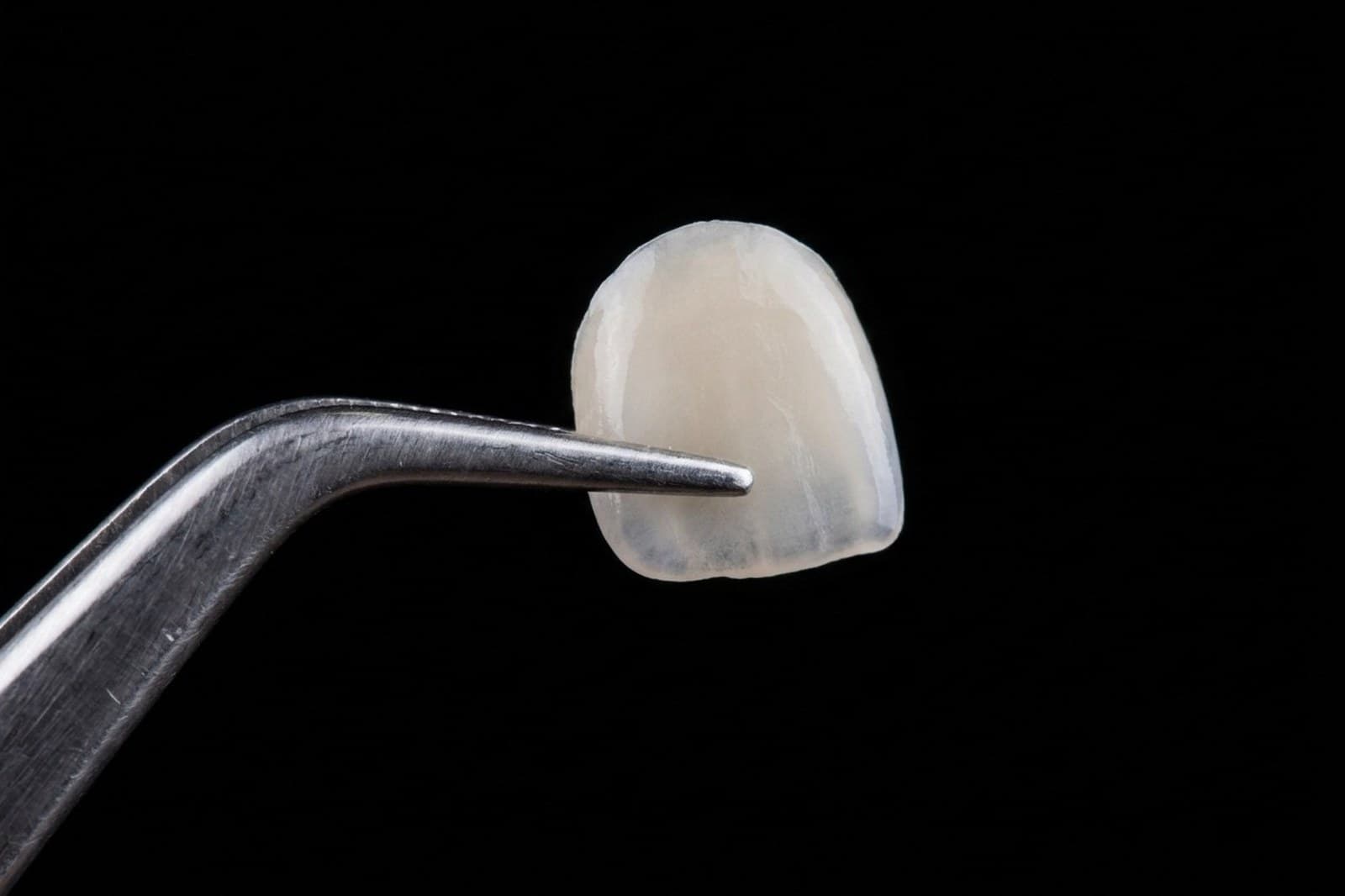
"Doctor, I was eating dinner last night and the thing on my front tooth just popped off. My tongue keeps catching on something rough and I'm kind of panicking. Can you put it back on like before?"
I hear some version of this all the time, usually from someone holding out a piece wrapped in a tissue before they've even sat down. Your front teeth are the first thing people see, so when a restoration there fails, your hand goes to your mouth every time you smile and even meals start to feel awkward. A lot of our patients first find us in Apgujeong while looking into cosmetic work like veneers. In my experience, they're far more anxious when they come back with a veneer that has suddenly come off or cracked than they were before the original treatment.
No dental restoration comes with a guaranteed lifespan. How long one lasts depends on how it's cared for, and the mouth is a harsh environment: you chew and talk all day, so restorations gradually wear and take knocks. Below I'll go through the questions patients ask me most when a veneer comes off or breaks: the signs, the causes, and what to do next.
Can my veneer just be put back on?
When someone brings in a veneer that came off or broke, the first thing I check is whether it came off in one piece or broke into fragments.
According to the dental restoration guide on the Korea Disease Control and Prevention Agency's National Health Information Portal, if a restoration came off whole and the tooth underneath has no decay or other damage, there's a chance the original piece can be bonded back on after a careful evaluation. In that case the ceramic itself didn't fail. The bonding layer between veneer and tooth gave way. If the veneer you bring in is intact and still fits well, we can clean and disinfect it, prepare the bonding surface and put it back where it was.
A broken (fractured) veneer is another story. If the damage is tiny and barely affects how it looks or works, we can sometimes just smooth the sharp edge with dental instruments and you can keep using it. But if a sizable chunk has broken off or there's a crack running through it, gluing the pieces together won't bring back the strength the ceramic had. Rather than forcing it back on, I'll look at the tooth as a whole and decide whether a new veneer needs to be made.
Why veneers break or come off
To answer this, I start with your eating habits and how your upper and lower teeth meet (your bite). The Korean Academy of Prosthodontics points out that a veneer, unlike a typical crown that covers the whole tooth, is a thin shell bonded to only part of the front surface, so the wrong kind of force can pop it off or break it.
When I examine patients, weak cement is rarely the whole story. Usually the veneer has been taking more force than it can handle, day after day. That includes people whose lower teeth strike the back of the upper front teeth too hard, and people who clench or grind in their sleep without knowing it. Tearing through chewy dried squid or crunching ice with your front teeth is hard on a veneer too, and so are small habits like biting your nails or chewing on a pen.
So to work out why a veneer came off, we examine your mouth closely and start with a bite test: you bite down on a thin strip of colored paper (articulating paper) that marks exactly where your teeth hit. If we simply bond the veneer back on without fixing the cause, the same one could come off again before long.
Checking veneers in a mirror for any lifting or chips
Do I need treatment right away?
Some patients ask whether they can put off coming in for a few days, since nothing hurts and the tooth isn't sensitive. But the KDCA National Health Information Portal notes that if a veneer is left off, the exposed natural tooth can become sensitive, and decay or a second fracture can follow.
The surface that was under the veneer may react strongly to anything that touches it. With saliva and bits of food sitting on it, the risk of contamination and cavities goes up. So if you notice a veneer has come off or broken, getting to a dentist as soon as you can, so the tooth surface can be protected and checked, is the safest way to keep your natural tooth from further damage.
At the visit, we first clean off any leftover cement, then use X-rays and a visual exam to check the exposed tooth for decay or hairline cracks. If you need a new veneer, we take an impression or scan your teeth with a 3D intraoral scanner. The dental lab needs about 1 to 2 weeks to make it, and in the meantime we cover the tooth with a temporary protective material or a temporary tooth so you can get on with your day. The exact steps and timeline can vary a little from person to person.
A few things you can do at home before your visit:
- Keep the veneer: Whether it came off whole or in pieces, put it carefully in a clean empty container or a contact lens case rather than a dry tissue. Bringing it in helps a lot in figuring out the cause and whether it can be bonded back on.
- Don't glue it yourself: Store-bought super glue or industrial adhesive can do irreversible damage to the tooth's nerve and your gums. Please don't try it.
- Avoid temperature extremes and pressure: Keep very cold or hot foods away from that front tooth, and don't bite into anything hard with it.
- Keep it clean: Use a soft-bristled toothbrush and gently clear away debris around the exposed tooth without irritating it.
Feeling along the edge of a veneer with a fingertip to check for lifting
Do I have to get veneers again?
Not necessarily, and I don't push anyone to repeat the same treatment by default. As I mentioned, many people come to us with cosmetic concerns, and when treatment isn't needed, I tell them plainly that they can skip it.
Say the chip is just at the very tip of the tooth, it doesn't get in the way when you eat, and it doesn't bother you in the mirror. Then we can smooth the sharp edge with dental instruments and stop there. If needed, filling just that spot with a little tooth-colored composite resin works well too.
Even when the veneer does need to be redone, you don't have to stick with the same approach. If the exam shows your bite is very strong or you grind heavily at night, so a thin veneer is unlikely to hold up, switching to a crown, which caps and protects the whole tooth, can be much better for long-term durability. And if you originally got a veneer just to cover a gap between your teeth, closing that gap with orthodontics, by moving your own teeth, can be a healthy alternative to bonding on a new one. The right choice depends on your gum health, how much tooth structure is left and the condition of your jaw joint, among other things, so it's worth sitting down with your dentist and weighing the pros and cons of each option.
Final thoughts
When I talk things through with patients, many are less upset about the veneer itself than about a bigger worry: "What if I get it redone and it breaks the same way again?" Restorations do a lot for us by standing in for natural teeth. But they aren't permanent, and after years of constant force they can wear out at any point.
What matters most isn't rushing to fill the empty space on your front tooth. It's finding out exactly why the veneer came off in the first place and choosing a path that keeps your tooth safe for the rest of its life.
If a front-tooth veneer has just failed and you're feeling rattled, try not to rush into anything. When you have time, bring in the pieces you saved and stop by. I'll take a careful, objective look at the tooth surface and tell you whether a little smoothing will do, or whether a different treatment would serve your long-term oral health better.
Frequently asked questions
How should I store a veneer that came off and bring it to the dentist?
Instead of wrapping it in a dry tissue, put it carefully in a clean empty container or a contact lens case. Whether it came off whole or in pieces, bringing it in helps us figure out the cause and whether it can be bonded back on.
Will I have to go without a front tooth while the new veneer is being made?
No. During the 1 to 2 weeks it takes the dental lab to make the new veneer, we make sure you can get on with your daily life. We cover the tooth with a temporary protective material or a temporary tooth, so there's no need to worry.
Can I stick it back on with super glue at home until I see the dentist?
Please don't. Store-bought super glue or industrial adhesive can do irreversible damage to the tooth's nerve and your gums. Leave it alone and come in as soon as you can.
How should I brush the tooth that's exposed after a veneer comes off?
Use a soft-bristled toothbrush and gently clear away debris around the tooth without irritating it. Food left sitting on the tooth raises the risk of decay, so keep the area clean, but go gently.
Sources
I referred to the public resource below while writing this post. The organization has not certified or endorsed our clinic and does not vouch for the content of this post.