
"My front teeth are a little crooked. Can't you just cover them?" I get asked this in consultations all the time, often by someone with a job interview or a wedding coming up, and I understand wanting straight teeth fast. Plenty of people tell me they cover their mouth in photos and hold back a real laugh. But once I look closely, it's surprisingly common that moving the teeth into their proper position first does more for long-term health and upkeep than bonding thin veneers over them to hide the shape. So rather than settling on a procedure right away, I walk patients through what their roots and gums look like and why the alignment should come first. Here I'll cover what to check if you're considering clear aligners for your front teeth, and how to prepare before your visit and during treatment.
Can't I just get a quicker fix for slightly crooked front teeth?
When one front tooth sticks out or there's a small gap between teeth, many people's first thought is cosmetic treatment: shaping the tooth surface and bonding on thin veneers to fix the look quickly. Patients who care a lot about keeping their natural teeth sometimes ask me directly about no-prep veneers, since they're said to do less damage to the tooth. Bonding a thin ceramic shell to improve color and shape can certainly be an excellent cosmetic option. But if the teeth are badly overlapped or flared, trying to force veneers onto them only goes so far.
Evening out a tooth's thickness or the angle it sticks out at can mean shaving down more of the surface than anyone expected. Removing healthy natural tooth structure can, over time, lead to sensitivity or gum inflammation. That's why, when overlapping or twisted teeth are the real cause, it's better to move the teeth into the right position first. Once they're lined up, any touch-ups to color or shape can be done with far less unnecessary damage to the teeth. For adults who'd rather not wear visible "train track" braces, clear aligners made from thin, transparent plastic trays can be a good alternative.
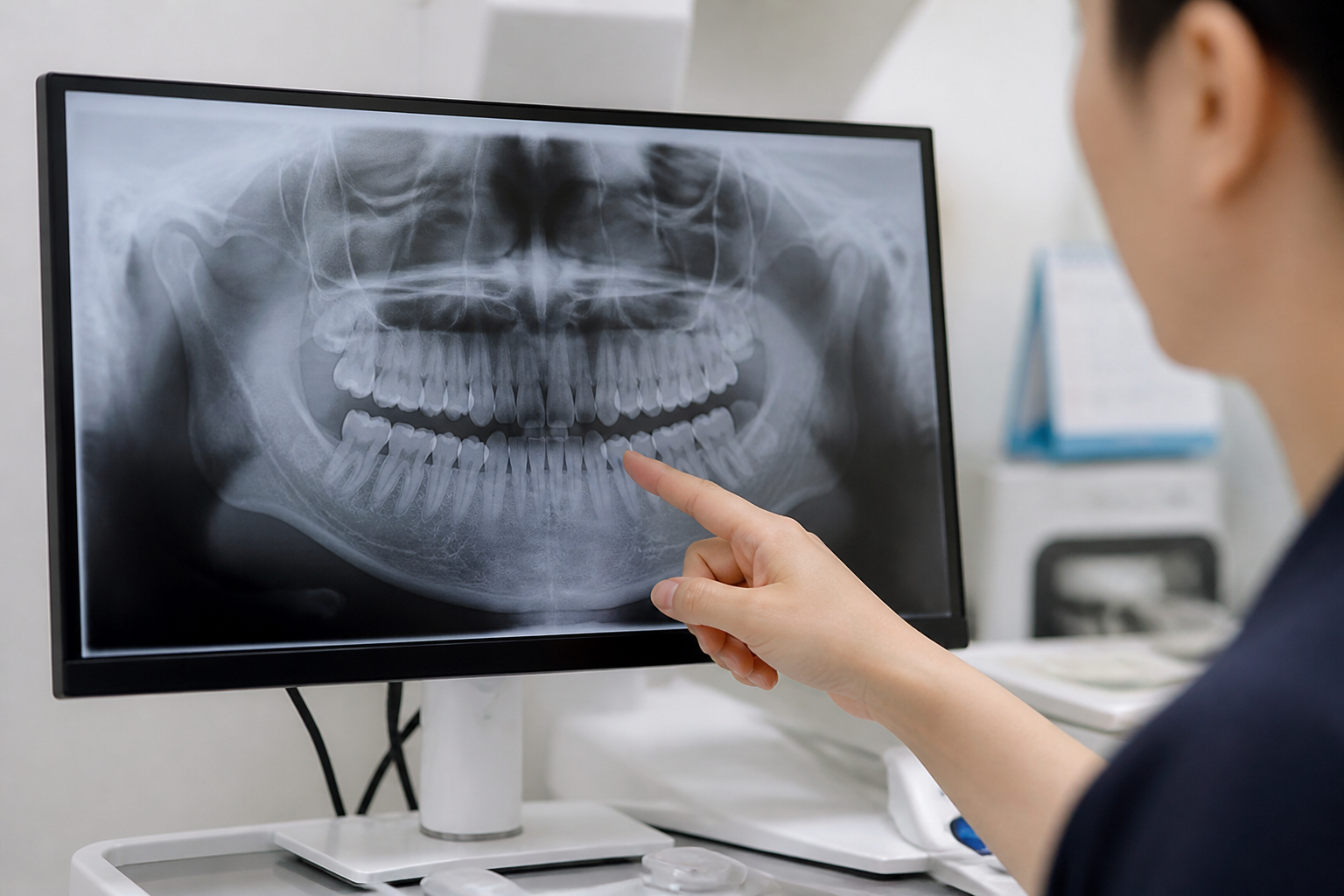
Checking the tooth roots and jawbone on a panoramic X-ray
Can clear aligners fix my teeth?
A lot of people prefer clear aligners because they're less noticeable and you can take them out yourself. But once we take a 3D intraoral scan and study the X-rays in detail, it turns out that not everyone can get the result they want from aligners alone. The Korean Association of Orthodontists notes that clear aligners can't treat every kind of bite problem and should only be used after a proper diagnosis at a dental office. Aligners work by fitting a clear tray over all the teeth and moving them in tiny steps. That makes them best suited to mild cases: front teeth that are slightly rotated or gapped, or teeth that shifted a little after earlier orthodontic treatment because the retainer wasn't worn enough.
If there's a large skeletal imbalance between the upper and lower jaws, or the crowding is severe enough that teeth need to be extracted and others moved a long way, aligners alone may struggle to precisely control the roots of the teeth as well as the crowns. When teeth need complex movements, like rotating or being pulled down vertically, traditional braces with brackets bonded to the teeth and a wire doing the work can be mechanically more efficient and more stable. Which approach suits your mouth and gum thickness is something to work out carefully with your dentist, and both what can be treated and the final result will depend on your individual anatomy.
What are the treatment steps, and how long does it take?
Impressions used to mean biting into a tray of putty, which most people hated. These days, straightening front teeth with aligners is usually much more comfortable, thanks to intraoral scanners and 3D simulation. At your first visit, we scan the inside of your mouth with a small, camera-like wand and turn your current teeth into a precise 3D digital model. From that data, we plan and predict on the computer how each tooth will move, down to the millimeter. We go over the simulation with you so you can see the expected result, and once the treatment plan is final, all the aligners for each stage are made at once.
When your aligners arrive, you'll usually switch to the next set yourself every 1 to 2 weeks. We sometimes bond small tooth-colored resin bumps (called attachments) to the teeth so the aligners grip better. You'll come in for a check every month or two so we can make sure your teeth are moving as planned without any trouble. Limited treatment that only needs small movements of the front teeth usually takes about 3 to 6 months. That said, how fast teeth move depends on the density of the bone around them, the condition of your gums and how many hours a day you wear the aligners, so the total treatment time varies from person to person.

A patient at an orthodontic consultation looking in a mirror and pointing to the front tooth that bothers her
What to keep in mind before your visit and while wearing aligners
What sets clear aligners apart most from fixed braces is that you can take them out and put them back in yourself. Because you remove them to eat and brush, keeping your mouth clean is much easier. But that also means your own commitment and cooperation make a huge difference to the result. Before treatment starts, there are a few things I always ask patients to stick to.
- Wear them long enough: Apart from eating and brushing, you need to wear your aligners consistently for at least 20 to 22 hours a day, including while you sleep, so your teeth can move smoothly into their planned positions.
- Always take them out to eat: Even soft food can crack or tear an aligner as you chew, so take them out and keep them in their case while you eat.
- Be careful with hot drinks: Aligners are made of plastic that doesn't handle heat well. Drinking hot coffee, tea or soup with them in can warp them so they no longer fit your teeth.
- Keep your mouth very clean: After a meal or snack, brush and floss thoroughly to clear away food before putting your aligners back in. Covering teeth that still have food on them makes cavities and gum inflammation much more likely.
In short
Crooked or gapped front teeth can really get to you, but as I often tell patients, the quickest, easiest procedure isn't the only answer. There are more ways than you might think to get straighter teeth while protecting their health and keeping them for the long run. If the alignment of your front teeth or a slight overlap keeps catching your eye in the mirror, I'd suggest first seeing a dentist for an objective look: whether your roots are strong, whether there's enough room to move the teeth, and which treatment would do the least damage to your teeth.
Choosing a treatment is entirely up to you. You don't have to decide on or start any treatment right away. A good first step is simply finding out the exact condition of your teeth and what their limits are. We'll examine your mouth carefully, we won't push you into anything, and we'll work with you on what's best for your teeth in the long term. Come in whenever you're ready, and we can go through your questions one at a time.
Frequently asked questions
What do I do with my clear aligners when I eat or brush?
You take them out yourself when you eat or brush. Unlike fixed braces, they're removable, which makes keeping your mouth clean easier. After eating, just brush your teeth and put them back in.
Do I get new aligners swapped in at every dental visit?
No. We give you several sets of aligners, and you usually switch to the next set yourself every 1 to 2 weeks. You'll come in once every month or two so we can check how your teeth are moving.
If my teeth are severely crowded, does that rule out clear aligners completely?
Severe crowding that involves extractions or large tooth movements can be hard to manage with aligners alone. In those cases, we let patients know that traditional braces with brackets may be the more mechanically stable option.
After my front teeth are straightened, do I have to get veneers?
No, you don't have to. We only add them, as an option, if you still want to improve the color or make small changes to the shape once your teeth are lined up. Doing orthodontic treatment first lets us refine the shape while avoiding unnecessary damage to your natural teeth.