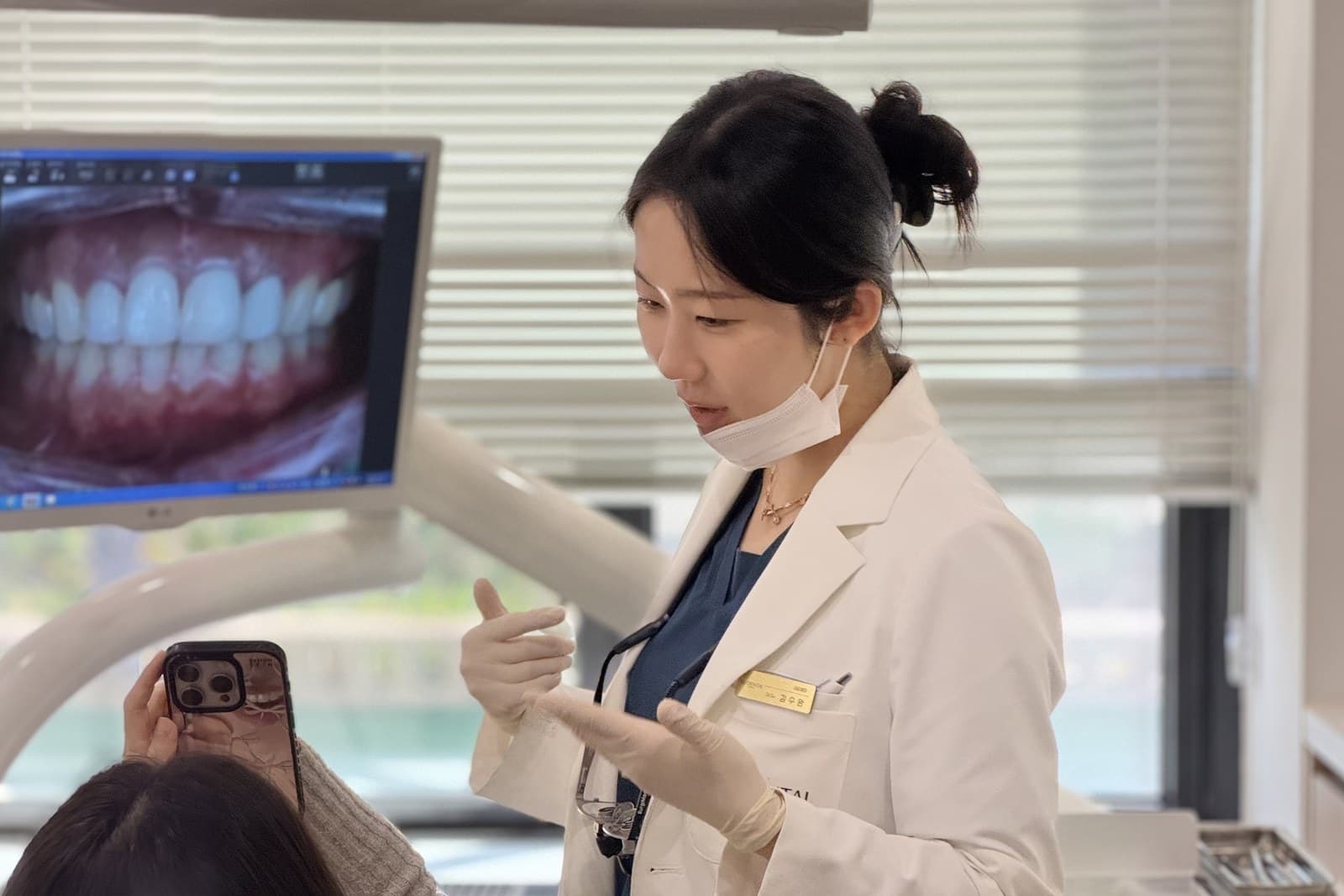
A lot of consultations start with nearly the same words. "Doctor, the shape and color of my front teeth keep bothering me. I catch myself covering my mouth in the mirror or when I'm laughing with people. But I've been scared you'd have to grind my teeth way down like I've seen on TV, so I kept putting it off." Front teeth are the first and most visible thing people see when you talk, so even a tiny gap or a shade slightly off from its neighbors can weigh on you. You want a bright smile back, and you're also afraid of losing natural teeth you only get once. Feeling both is completely normal. So when someone comes in with that worry, I don't recommend a procedure the moment they sit down. First I need to know exactly what bothers you in the mirror and where it comes from: your bite, the shape of the teeth, or an old injury. My first job as a dentist is to work out, one step at a time, whether you really need this treatment and whether another option would leave your teeth untouched.
Do my teeth really have to be ground down a lot?
Say "veneers" and many people picture the whole tooth being cut down small, the way it looks in older cases or photos passed around online, and they're scared before we've even talked. But veneers don't work by shaping the tooth into a stump and capping it. A thin ceramic shell is bonded only to the front surface of the tooth to improve its shape and color. So a lot of tooth doesn't necessarily have to come off. With the minimal-prep approach that many clinics, ours included, now use, we smooth the surface by only about 0.1–0.2 mm, staying within the enamel, the hard protective outer layer of the tooth. Depending on the shape of your teeth and how far they stick out, it can even be done safely as no-prep veneers, with no reshaping at all. Reshaping this little, or not at all, has become possible because the bonded ceramic materials are far stronger than they used to be and 3D diagnostics have advanced. According to guidance from the Korea Disease Control and Prevention Agency's National Health Information Portal, making a diagnostic model before treatment to assess the patient's current mouth lets the dentist predict accurately how much tooth needs to be removed, which greatly cuts down on unnecessary grinding. That model is the tool I rely on most in a detailed diagnosis. The first thing I do is put a number on how much surface reshaping is needed while staying within safe limits for the tooth's natural strength, the position of the nerve and your ability to chew. It's a basic step, and an essential one: it prevents the over-grinding that causes sensitivity and keeps your natural teeth as close to their original form as possible.
Can I get minimal-prep veneers right away?
My answer to this is always the same: "It depends on the person, on how your teeth are lined up and on how your upper and lower teeth meet." If you have small gaps that show dark spaces between your teeth, deep internal staining that even long-term whitening hasn't fixed, or undersized teeth (teeth noticeably smaller than the ones around them), we can add a thin ceramic shell and fill out the shape so it blends in, while barely touching the tooth surface. For people who fit these conditions, minimal-prep or no-prep veneers are a very good choice. Still, it isn't the answer for everyone. It's a different story entirely if your teeth are badly crooked and overlapping, if your front teeth stick out a lot like buck teeth, or if you have a deep bite where too much chewing force lands on the front teeth. In that kind of unstable situation, forcing thick shells on without reshaping can make your mouth look more pushed out than before, which you won't be happy with. It can also leave the gumline chronically swollen and make the veneers prone to breaking while you eat. Rather than pushing ahead with veneers on the front teeth, the right order for your gums and teeth over the long run is to correct the position and angle of the teeth first, with limited orthodontic treatment or full clear aligner treatment. Keeping your natural teeth as close to their original state as possible is the core of treatment, so if you don't actually need veneers, or if something like orthodontics should come first, I explain those options to you openly.
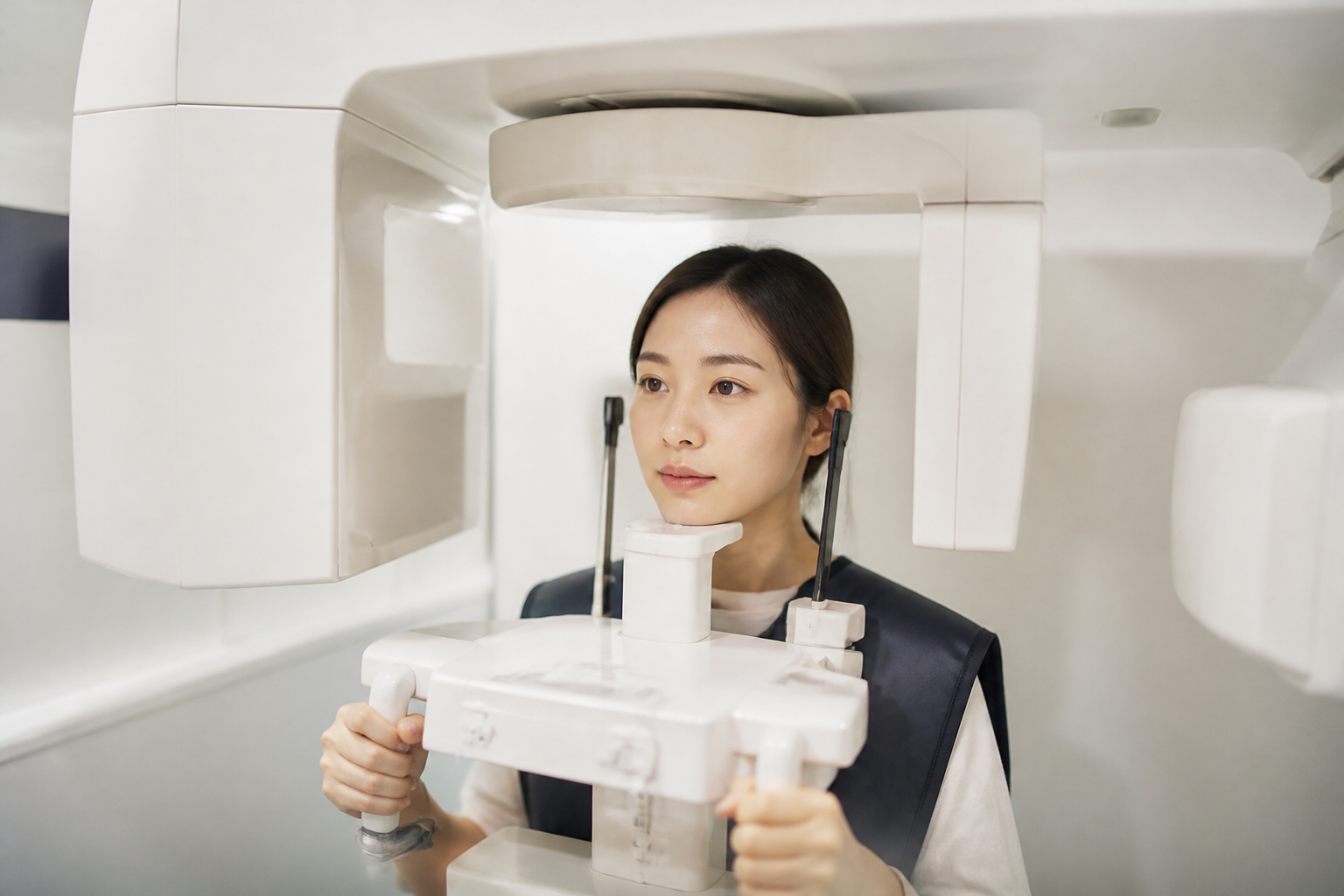
CT scan capturing all the teeth and the jawbone
Steps in the diagnosis
The detailed diagnosis begins by turning what we can see in your mouth into 3D data rather than flat images. From the full scan and diagnosis, through making the diagnostic model (mock-up), to walking you through the final treatment plan usually takes about 1–2 weeks. That can vary a little with your mouth and with our in-house dental lab's schedule. First, we use a 3D intraoral scanner and precise imaging equipment to capture your tooth alignment, the fine curves and heights of your gums and the forces in your bite when your upper and lower teeth come together, all as digital data. Materials from the Korean Academy of Prosthodontics stress that successful restorations need more than copying the shape of the teeth. They require a full assessment of facial contours, the bite and the health of the gums. Using this detailed data, we run a computer simulation and make a diagnostic model called a digital mock-up, which shows in 3D how your teeth would look after treatment. You can try the finished mock-up on in your own mouth and check in the mirror whether your lip line and tooth shape look natural together when you smile, and whether anything feels foreign. During this step, I listen closely to what you want in terms of tooth shape, length and translucency, and we fine-tune the details. Then we lock in the smallest area of reshaping needed and the final design of the veneers. This step matters a great deal: it takes the guesswork out of the result and puts you and your dental team on exactly the same page.
What to prepare before your consultation
A few things are worth checking on your own, in the mirror, before you come in. They help the diagnosis and consultation go smoothly. You don't need complicated paperwork or test results from another clinic. But telling us about your daily habits and the trouble you've had with your teeth, in as much detail as you can, goes a long way toward pointing the diagnosis in the right direction.
- Ask your family or the people around you whether you clench or grind your teeth in your sleep. This directly affects the pressure thin veneers have to withstand every day, so we need to factor it in to make them last and keep them from breaking.
- If a front tooth was ever broken or decayed and filled with composite resin, or if you've had a root canal, or braces as a child, please let us know at the consultation.
- Try to remember whether your front teeth have felt achy or zingy when you drink ice water or cold water, or when you brush. Knowing how they usually feel helps us assess your gums.
- Think about what you most want to fix when you look in the mirror, whether it's yellow color, uneven shape or gaps, and come in with your priorities in mind. That makes it easier to build a plan that fits you.
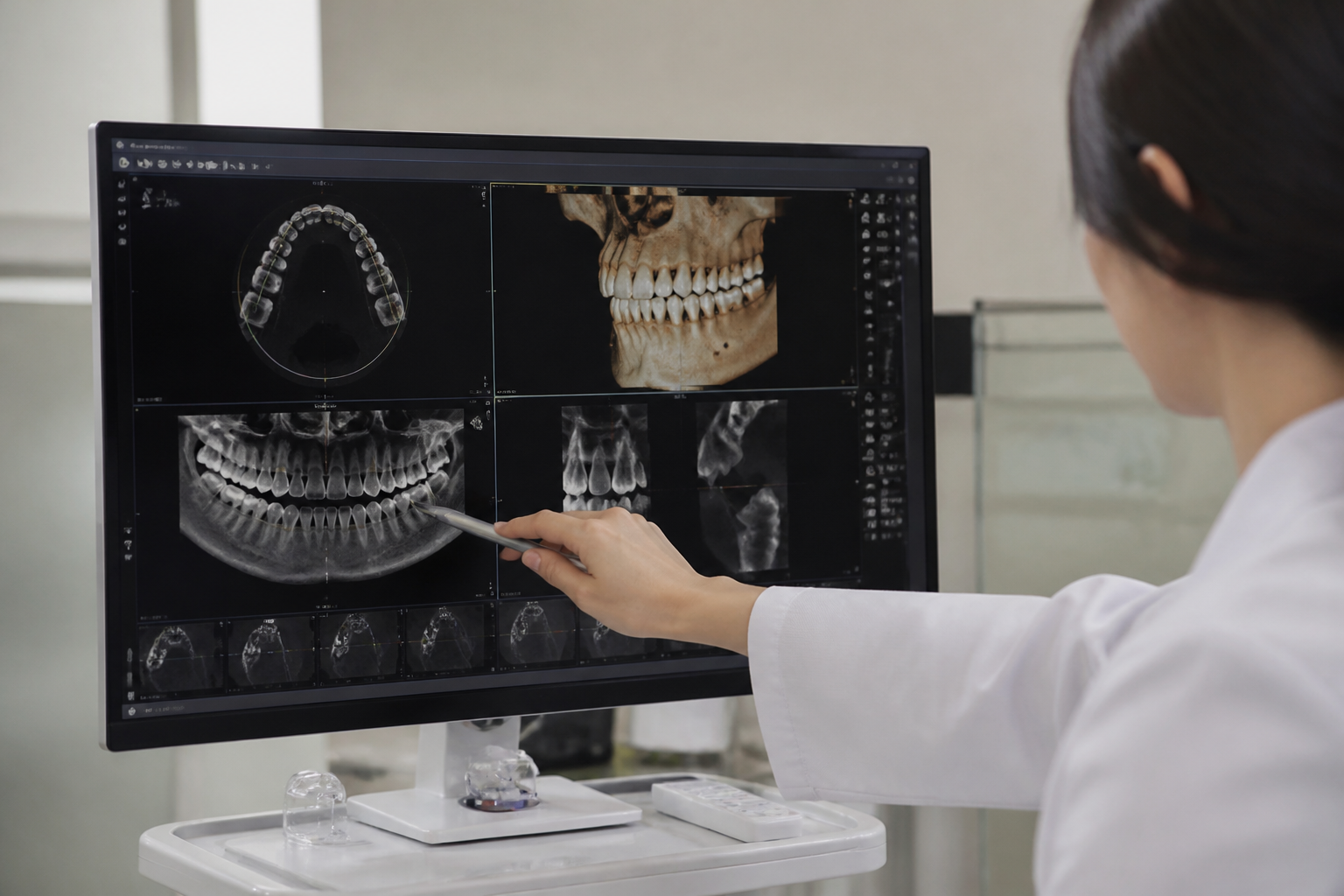
Reviewing CT and panoramic images to assess the teeth and jawbone as a whole
Wrapping up
At the end of every consultation about cosmetic treatment, I come back to one point. Getting a nice look right away matters less than this: every treatment decision has to start from protecting the health of your natural teeth while safely easing the discomfort you feel day to day. If the shape or color of your front teeth is getting you down and making you hold back around people, don't rush into a procedure. Get an accurate diagnosis first: what's going on with your teeth, and what's really causing the problem. Rather than worrying alone or deciding on the strength of friends' stories and vague online reviews, sit down with your dentist for a proper diagnosis and look objectively at the safe options you have. Then take your time and talk it over with your family. It's not too late to decide then which option will keep your teeth healthy the longest without side effects. I hope this guide gives you what you need to know to judge what good treatment looks like.
Frequently asked questions
Can I find out how much tooth will be removed before any reshaping?
Yes. Before treatment, we analyze your mouth with a 3D scanner and make a diagnostic model. That lets us predict exactly how much needs to be removed while staying within safe limits for the tooth's natural strength and your ability to chew.
What kinds of teeth are minimal-prep or no-prep veneers right for?
We recommend them for people with small gaps between their teeth, deep staining or undersized teeth. A thin ceramic shell can be added to improve the shape so it blends in, while barely touching the tooth surface.
How do you treat teeth that are badly crooked?
If teeth overlap a lot or stick out, forcing veneers onto them can cause them to break. In those cases, we recommend straightening the teeth first with limited orthodontic treatment or full clear aligner treatment.
How long does it take to get from diagnosis to a final treatment plan?
Going from the 3D scan and diagnostic model to the final treatment plan takes about 1–2 weeks at our clinic. The timing can vary a little with your mouth and our in-house dental lab's schedule.
References
I consulted the public sources below while writing this post. These organizations have not certified or endorsed our clinic, and they don't vouch for the content of this post.