
With a job interview, a wedding or some other big day coming up, people often rush in for teeth whitening. "I heard you do one-visit whitening here. I'm short on time, so can't you just put the gel on and make them white?" Then I look in their mouth and say, "Before we whiten, I'd like to do a thorough cleaning first," and some of them look puzzled. Why bother with two steps?
What I tell everyone who comes to SU Dental Hospital is that the groundwork matters most. You level the ground before you put up a building. Dental work is the same: the tooth surface has to be cleaned up first if you want a safe result you're happy with. So here's why tartar should come off before whitening, and when you may not need whitening at all.
Can I skip the cleaning and just get whitening?
Nobody wants to spend longer in the chair than they have to, so it's easy to assume we just brush on some whitening gel, shine a special light, and you're done. But if tartar and plaque have built up all over the teeth, the gel won't work properly. According to patient information from the Korean Dental Association, whitening works because hydrogen peroxide, the main ingredient in the gel, seeps into tiny pores in the enamel and chemically oxidizes and breaks down the stain molecules inside.
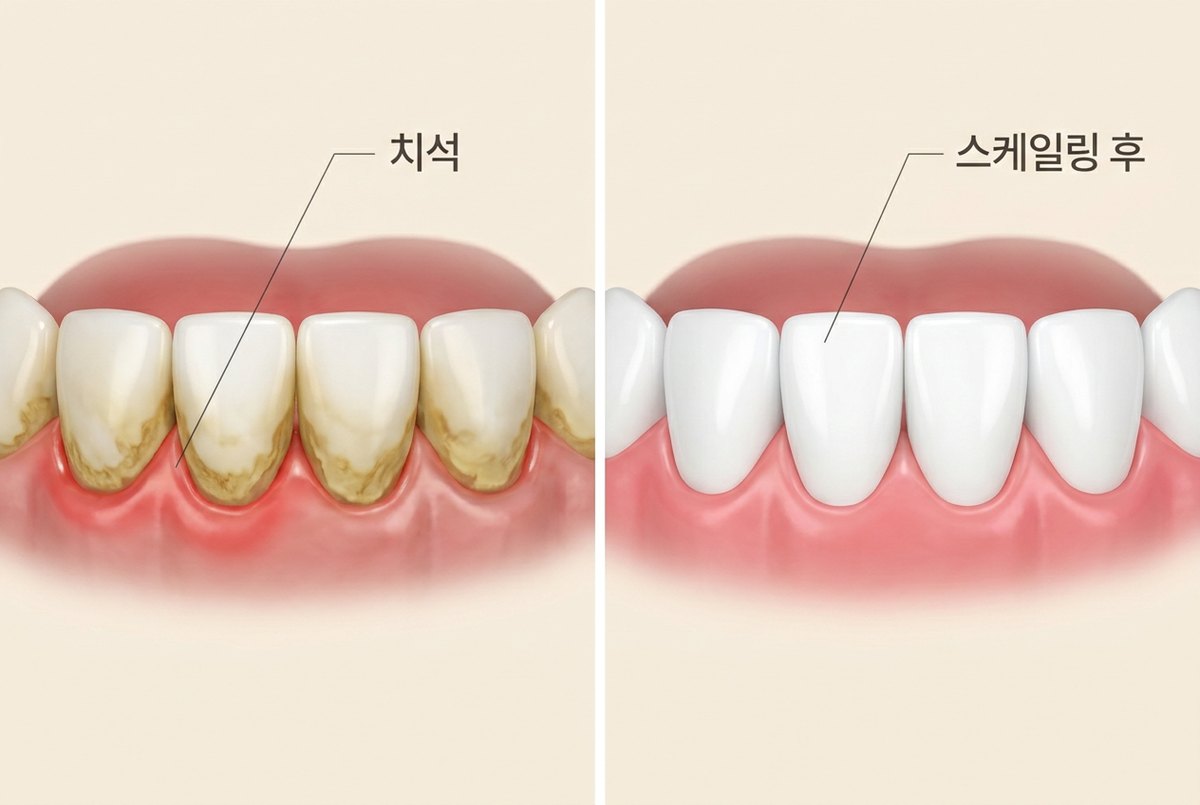
Teeth with tartar buildup (left) and the same teeth after a cleaning (right)
If the teeth are coated with hardened tartar or a thin, sticky film of plaque, the gel can't soak in evenly and just sits on the surface. The spots covered by tartar or debris never get treated and stay yellow, while the areas that happened to be clean turn white. You can end up with blotchy teeth. That's why we put so much weight on clearing away whatever is blocking the gel, with a professional cleaning (scaling) first, so every tooth whitens evenly and naturally.
Will a cleaning alone make my teeth whiter?
The first thing I tell almost everyone who asks about whitening is this: "Let's start with a cleaning today. If you still don't like the color afterward, you can decide on whitening then. It's not too late."
Plenty of people are busy and haven't had a cleaning in a long time, so thick tartar has built up between their teeth. For others, the yellow comes mostly from shallow surface stains from coffee, green tea or smoking. In cases like these, many people get their natural, clear tooth color back with a cleaning and a light polish (smoothing the tooth surface), without ever needing high-strength whitening gel.
As Korea's national health information portal (run by the Korea Disease Control and Prevention Agency) explains, a cleaning is the most basic kind of oral hygiene care. It removes what causes gum disease and wipes physical buildup off the teeth. If the cleaning takes care of most of the yellow you've been worrying about in the mirror, there's no reason to spend extra money and time on chemical whitening. If you don't really need whitening, I won't push you into it. Sometimes getting the surface grime off is enough to give you back a smile you're happy with.
Are there teeth that whitening can't brighten?
Even after a cleaning leaves the surface spotless, there are cases where whitening won't do much. It isn't a cure-all, and depending on the cause, it has clear limits.
One example is teeth that are naturally very dark. Another is staining from tetracycline-type antibiotics taken in childhood, which can discolor teeth from deep inside and leave horizontal bands. With this kind of internal staining, the gel can get in, but there's only so much it can lighten. The same goes when the enamel on the front teeth has worn thin over the years, or the edges are slightly chipped and the shape is uneven. Brightening the color alone usually won't give you the neat, bright look you were hoping for.
In those cases, rather than forcing whitening, we can look at other cosmetic options. No-prep veneers are one choice these days, since they can improve both the shape and the color while taking off less natural tooth. Still, veneers are bonded onto the teeth, so we only consider them carefully, when they're truly needed, after checking your bite and your gums. We lay out these limits and alternatives openly and work through the decision with you.
How to plan and prepare for one-visit whitening
"So how should I schedule things and get ready for one-visit whitening?" Here's how the visit works. One-visit whitening is in-office whitening done start to finish in a single day, using high-strength gel and a special light. Including the cleaning, it usually takes about 1 hour 30 minutes to 2 hours. If you take good care of your teeth, your gums are healthy and there isn't much tartar, we can carefully apply a protective gum barrier right after the cleaning and go straight into whitening the same day.
It's a different story if there's a lot of tartar and your gums bleed or swell a little after the cleaning. Putting strong whitening gel on right away can irritate the gums and make your teeth very sensitive. It's much safer, and less painful, to wait about 2 to 3 days for the gums to settle and then come back for whitening.
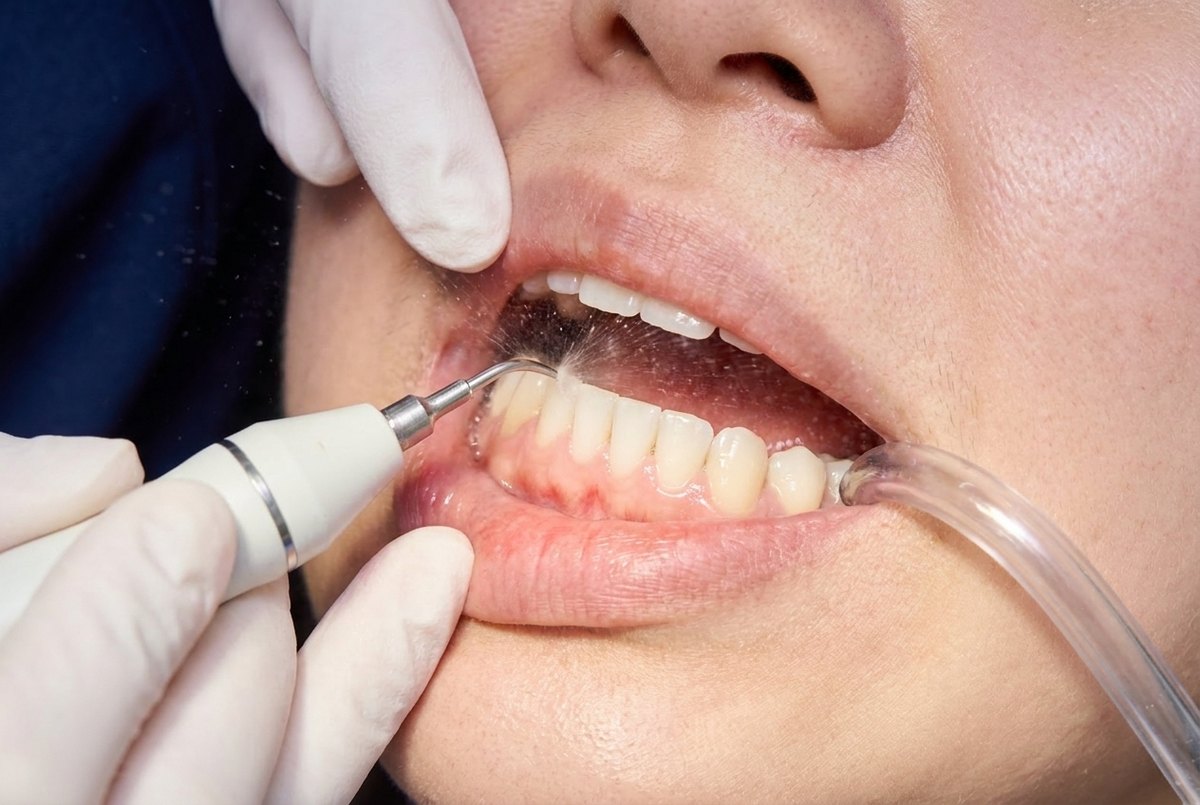
An ultrasonic scaler removing tartar along the gum line
If you're planning on whitening, it helps to go over this short checklist before and after your visit.
- If you have cavities or bad gum inflammation, the gel can irritate the nerve, so those need to be treated before whitening.
- For 1 to 3 days after whitening, your teeth may be temporarily sensitive, so avoid very cold or very hot food.
- For the first 2 to 3 days, the tooth surface picks up stains more easily than at any other time. Stay away from coffee, black tea, curry, wine, cigarettes and other things that stain.
- Keep in mind that your results, and how long the white color lasts, will vary with your diet, brushing habits and oral health.
Before you whiten
Teeth whitening is a good way to deal with self-consciousness about dark or yellow teeth and brighten your whole face. But it's never as simple as putting gel on the teeth and calling it done. Cleaning the tooth surface first, so the gel has a clean base to soak into, is the first step toward a good result.
If you've been looking in the mirror, unhappy with the color of your teeth but putting off a dental visit, I hope you won't rush into one-visit whitening just because you have something important tomorrow. Come in first and let us take a calm look at your mouth. A single cleaning today might solve a worry you've had for years. Or, depending on your teeth, a completely different treatment might suit you better than whitening.
At SU Dental Hospital, protecting your natural teeth always comes first. Rather than deciding on your own in a hurry, take your time and work out with us the most natural, safe option that won't put strain on your teeth. When you've thought it over and feel ready, come see us and we'll give you an honest answer.
Frequently asked questions
When can I get a cleaning and whitening on the same day?
Same-day treatment is possible if you take good care of your teeth, your gums are healthy and there isn't much tartar. We check your gums right after the cleaning and only go on to whitening if we judge it won't strain them.
My gums bled after the cleaning. When should I come back?
If there was a lot of tartar and your gums swelled or bled after the cleaning, we recommend waiting about 2 to 3 days. Coming back once your gums have settled helps cut down on sensitivity during whitening.
Do teeth yellowed by coffee or smoking always need whitening?
If the cause is shallow surface staining, many people get a clear color back with just a cleaning and a light polish. We do the cleaning first, then talk with you about whether more whitening makes sense based on the result.
How can teeth stained by antibiotics be treated?
Internal staining that starts deep inside the tooth has clear limits when it comes to lightening with regular whitening gel. In these cases, we examine your teeth carefully and then suggest other cosmetic options, such as no-prep veneers.